Social Power / Guide
How to Judge People by What They Do, Not What They Say
Charm and promises are cheap. Five steps to read people by their pattern of behaviour, at work and in dating, without labelling everyone a villain.
TrainsSee the Dark Move · Integrity Compounds
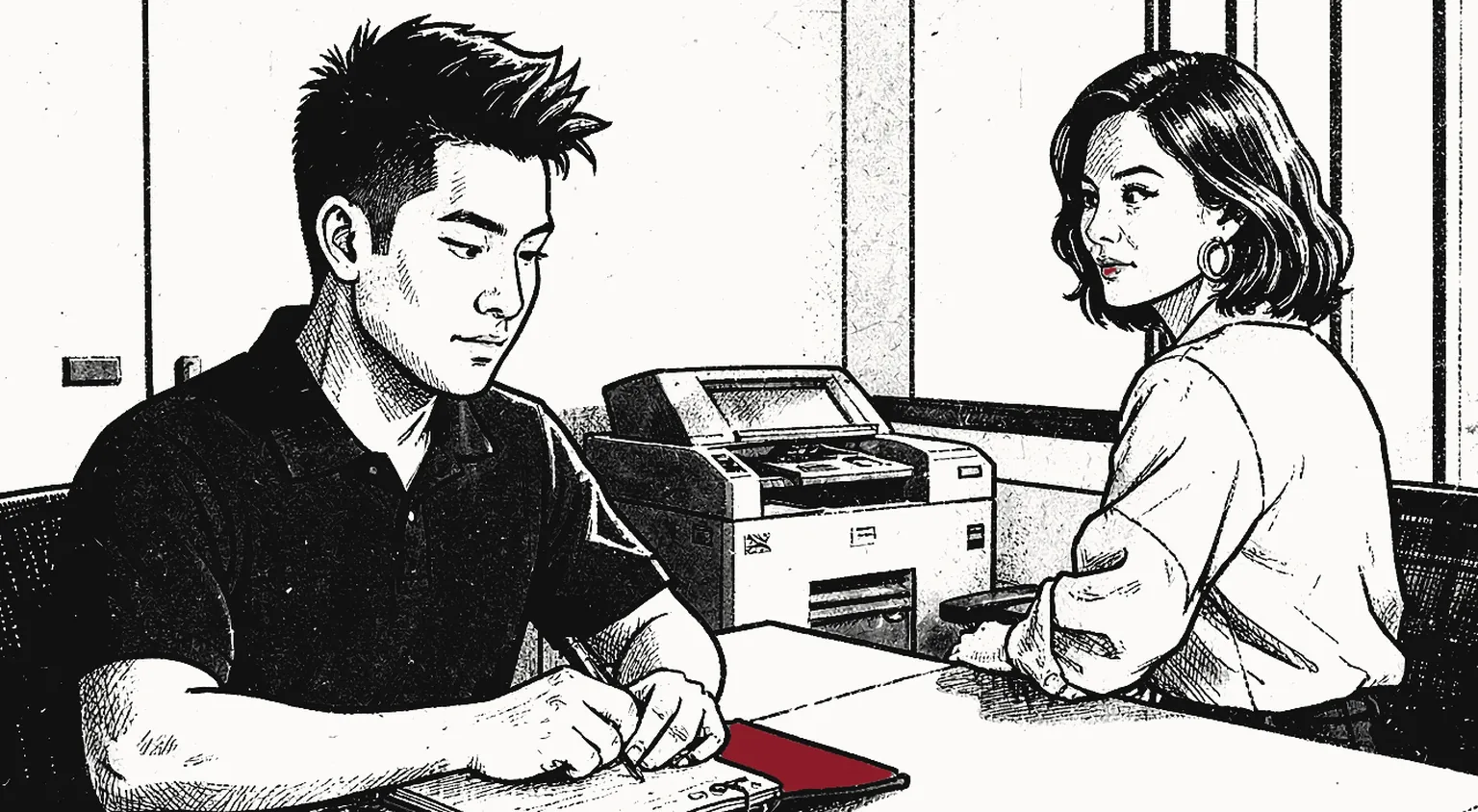
Nat's new manager is lovely in meetings. She praises, she smiles, she says "my door is always open." Three months on, Nat has noticed two things. Every idea she shares in private shows up later in the manager's slides, and the one junior who disagreed has been moved to another team. Nothing the manager said was false. It is what she did that tells the story.
Most of us judge people by how they make us feel in the first hour. Charm is fast and cheap, and a person who wants something from you will use it. Behaviour over time costs more to fake.
So the rule is simple: trust what people do repeatedly more than what they say once. This guide is for anyone who has to decide whom to rely on, share ideas with, or sign a deal with. The skill is reading patterns without condemning anyone.
The short answer
- Separate the words from the act. Write down what happened, not what it meant.
- Look for the pattern. One moment is a question. Three moments are data.
- Check who benefits. Follow the result, not the explanation.
- Watch how they treat people with no power. Juniors, assistants, service staff.
- Build so you do not need to guess. Make agreements that work even if they are not honest.
DiagramWhat counts as evidence
Our own ordering of how much weight to give each signal. It follows the idea shared by several of the books below, that behaviour beats talk.
Step 1: Separate the words from the act
George Simon's In Sheep's Clothing describes people who fight for control while hiding it behind kindness and half-truths. The key point for us is a habit he pushes: look at what the person did, not at what they say they meant. He notes that victims are often confused because the aggression looks like care.
His own exercise, from the summary, is a "fact versus feeling" log. When you feel annoyed, guilty or confused after talking to someone, write two columns. In the first, the exact words and actions. In the second, what you think they intended. Do not judge the second column yet.
This is See the Dark Move: you cannot answer a move you have not described.
Step 2: Look for the pattern
One act tells you little. A repeated act tells you what the person does when it suits them. Simon says covert aggressors change behaviour mainly when their power is threatened, not because they had a change of heart. That is why a pattern across different moments matters more than any single apology.
Keep a simple note for a week or two: date, what happened, what you did. When you review it, ask: does the same thing keep happening, and does it keep ending in the same person's favour?
Marshall Goldsmith, in What Got You Here Won't Get You There, helps with the other side. He says claiming undeserved credit makes people angrier than almost any other workplace flaw, and that most of it is not malicious. It often comes from busy people, a pay system or old habits. So a single credit grab is a flag, not a trial.
Step 3: Check who benefits
Charm is easy to fake, so follow the outcome. Who ends up with the credit, the information, the choice? Who ends up carrying the cost?
Robert Glover's No More Mr. Nice Guy has a useful angle: giving with hidden strings. A gift or a favour that carries an unspoken expectation is a covert contract. The giver is not honest about wanting something back, and the receiver is trapped by a debt they did not choose. Ask of any generous person, including yourself: what do they expect in return, and did they say so?
The same test works the other way for warmth. A friendly person who always gets what they want from you, and never asks about you, is giving you a pattern, not a gift.
Step 4: Watch how they treat people with no power
People are on their best behaviour with those who can hurt or help them. The more telling moments are the ones where nothing is at stake for them: a junior, an assistant, a server, someone who cannot repay or retaliate.
Daniel Goleman's Social Intelligence gives two pieces of evidence, both worth holding loosely. He describes a university experiment where a woman assistant, flustered, refused to finish reading a passage to men one at a time. Most men forgave her. Narcissistic men punished her on every measure. He also says the "Dark Triad" types can read people very well and still feel nothing, and that real remorse is one thing that separates ordinary wrongdoers from them.
Two cautions come from the same book. Some researchers see these as traits everyone has in different amounts, and the summary notes that high scores do not always mean harm. And one experiment is one experiment. So use it as a prompt: watch how someone speaks to the lowest-ranked person in the room, and whether they feel and show regret when they cause harm.
Step 5: Build so you do not need to guess
You will never read people perfectly. The best defence is to make your deals and habits hold up either way.
Fisher and Ury make this point in Getting to Yes: do not build a deal on trust. Build one that works whether or not the other side is honest. In practice, that means written terms, checks along the way, and consequences that do not depend on anyone's good mood. The other person need not take offence. It protects the relationship on the day a good guess turns out wrong.
At work the same idea means keeping your own work documented, sharing ideas in writing when stakes are high, and agreeing next steps in an email. At home it means noticing patterns, and keeping your own friends, money and plans, so you can walk away if the pattern turns out poor. This is Keep Your Options.
Your callWhat would you do?
You are Ploy, and your boss, Rui, is warm and supportive in one-to-ones. Twice now, he has used your work in front of senior leaders without naming you. Each time, he explained it afterwards as "just being efficient."
Weaker move. Lever 3 is missed. You have two data points and a clear pattern, and silence teaches him the move costs nothing.
Strongest move. Lever 3 and Lever 9. You describe the act, not his character, and you make the fair behaviour easy to repeat.
Weaker move. Lever 9 is broken. You went from a pattern to a verdict, and gossip costs you trust if you are wrong.
Your callWhat would you do?
Daniel has dated Mei for two months. She is warm and attentive when they are alone. She is curt with his friends, rude to the waiter on every date, and has told Daniel his old friends are "a bad influence."
Weaker move. Lever 3 is lost. A repeated pattern with several people is the strongest evidence, and you are ignoring it.
Weaker move. Lever 9 is broken. Tests are manipulation, and they cost you your own honesty.
Strongest move. Lever 3 and Lever 8. You name the act, give a fair chance to change, and keep your options.
The dark version
The line is your own motive. Watching patterns is protection. Hunting for faults to use against someone is not. That is where how to spot manipulation ends and manipulation begins.
Drill
A cleaner way to judge
Next, read How to Spot Manipulation, then Office Politics.
Questions people ask
Is it fair to judge people by one bad moment?
No. Everyone has a bad day. Look for a pattern across several moments and several people. One moment is a question. A repeat is an answer.
What if someone has a good explanation every time?
Explanations are words, so weigh them less than the result. In In Sheep's Clothing, George Simon says covert aggressors often hide the goal behind kindness and reasons. If the outcome keeps going their way, the reasons stop mattering.
How is this different from being paranoid?
Paranoia decides first and finds proof later. This method collects a week of plain notes first and decides after. It also keeps you open to good surprises, because good behaviour counts as evidence too.
Does this work in dating as well as at work?
Yes, the idea is the same: watch the pattern, especially how they treat people who cannot help them. Use it to decide how much to trust. Do not use it to run tests on a partner.
Sources: In Sheep's Clothing; Getting to Yes; Social Intelligence; What Got You Here Won't Get You There; No More Mr. Nice Guy. Ideas summarised in our own words.
This page trains Lever 3: See the Dark Move. Know the hidden tricks so nobody plays you.
Also: Integrity Compounds.
Next lever: Name the Feeling
Find your weakest lever
12 questions, 2 minutes. You get your type and the one lever to train first.
Take the Influence Score