Career & Status / Guide
When Someone Takes Credit for Your Work: What to Do
A colleague or boss took credit for your work. How to prevent it, respond calmly, escalate if needed, and know when to let it go.
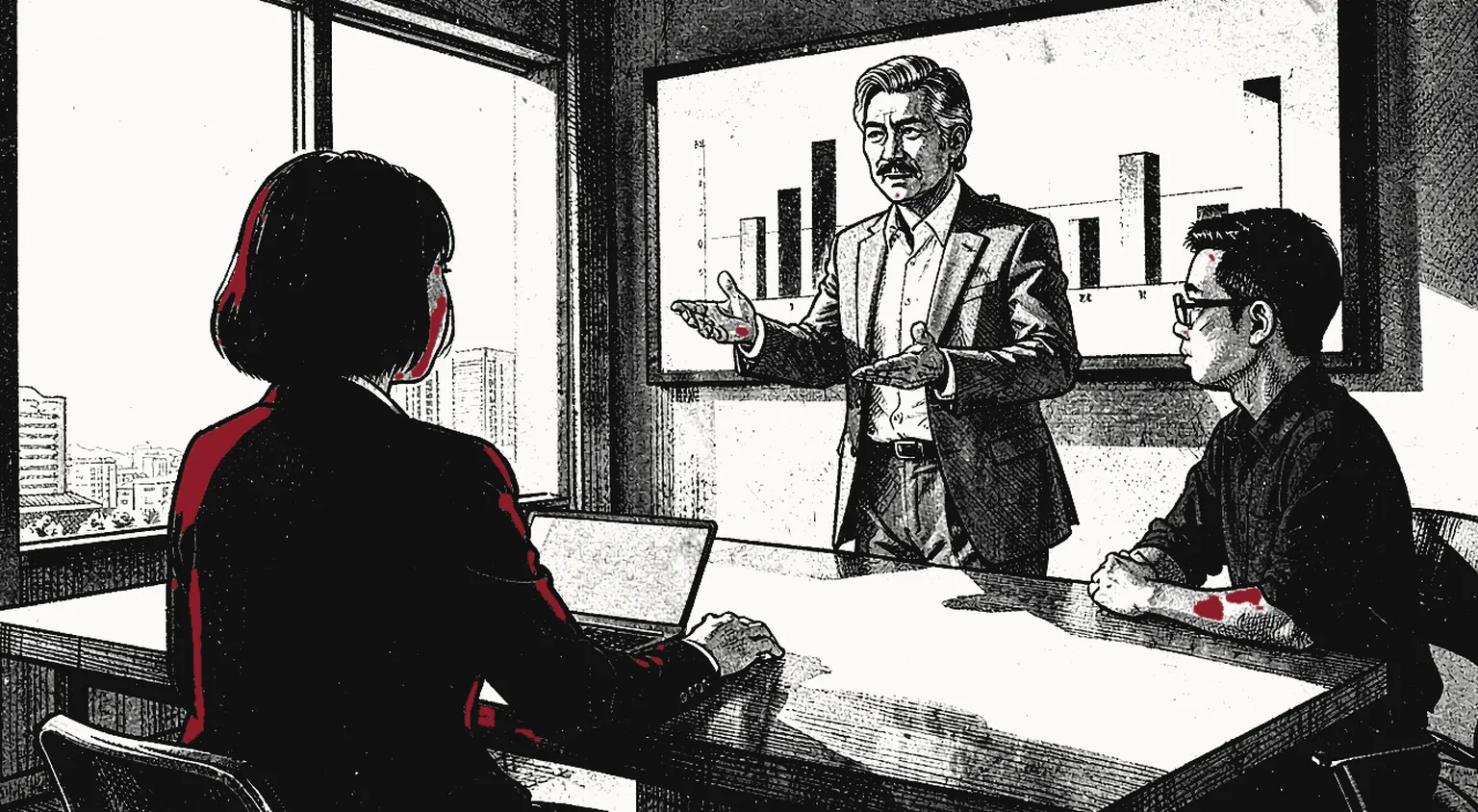
Ploy spent three weeks building the client report. On Monday her colleague Marcus presents it to the director, says "we put this together," and gets a nod and a thank-you. Ploy sits two chairs away with her mouth slightly open. The meeting moves on.
Credit theft is common, and it is rarely dramatic. Sometimes it is a vague "we." Sometimes a boss sums up your idea in his own words. Sometimes a person simply speaks first. In every case the cost is the same: the people who decide pay, promotion and trust now link the result to someone else.
Here is the uncomfortable truth. Nobody is paid for the work. They are paid for the work that the right person knew they did. That is Perception Rules. Work nobody connects to you is work you did for free.
So should you turn into a credit-grabber? No. Those people get found out. There is a third way: be easy to see, and calm when someone blurs the picture. My rule is simple: never fight for credit after the fact if you could have claimed it before.
The short answer
- Prevent first. Make your work visible while you do it, not after.
- Stay calm in the moment. Add your part to the record with one plain sentence.
- Talk in private, about facts. Ask what happened. Do not open with "you stole."
- Escalate only with a record, and only to someone who can change something.
- Know when to let it go. Some fights cost more than the credit is worth.
DiagramThe credit ladder
Five steps, from cheapest to most costly. Start at the left and move on only if the step before did not work.
Step 1: Prevent it by making work visible
Most credit theft works because there is a gap. Nobody saw you do the work, so anyone can claim it. Close the gap early.
Law 7 in The 48 Laws of Power says openly that credit is worth as much as the work itself, and that you must win it and stop others from stealing it. Here is where I disagree with Greene: he tells you to take credit for other people's work. He is right about the mechanism and wrong about the cost. The defensive half is sound: secure your name on the work before you share it.
Practical ways, none of them boastful:
- Send a short progress note to your manager, copied to one other relevant person. "Here is where the pricing model stands. I will finish the draft Thursday."
- Put your name and the date in the file, the slide footer or the ticket.
- Share drafts with two or three people, not one. Several people who saw it are a witness group.
- Speak first. If you present, you control the "I" and the "we".
Step 2: The calm response in the moment
You are in the meeting. Someone says "we" about your work. Your pulse jumps. This is the moment where most people lose.
The first rule is from Calm Is Power: do not act on the heat. A sharp reply feels good for ten seconds and makes you look defensive. If you need help staying steady in the room, see how to stay calm when attacked in a meeting.
The second rule is from Go Around, Not Through: do not attack the person. Add to the picture instead.
Other short lines that work in the room:
- "Glad it helped. I can take the next section, since I did the analysis."
- "Happy to explain how I got to that number."
- To a boss summarising your idea: "Yes, and the part I tested last week was this one."
The point is to add facts, not to win an argument. In Difficult Conversations, Stone, Patton and Heen say every hard talk has a "what happened" layer, a feelings layer and an identity layer. In the room you only need the first layer. Keep the other two for later.
Step 3: The private talk
After the meeting, wait until you are calm. Then ask for a short chat. Use the core idea from Difficult Conversations: go in to learn, not to win. You do not know what the other person intended. Maybe it was careless. Maybe it was on purpose. You do not need to know yet.
Describe what you saw, say what you want, and ask what they see.
Notice the structure. One fact. One clear request. One question. You are not asking for an apology. You are asking for a change in what happens next.
This is where See the Dark Move starts to matter. How the person answers shows which type you are dealing with:
- Careless: apologises, fixes it, does better. Keep working with them.
- Opportunist: denies or plays it down, then does it again. Treat them as a risk. Share less raw work with them.
- Boss with a habit: takes credit by role ("my team did it"). That is often normal, but you can still ask that your name appears when work goes above them.
Step 4: Escalate only with a record
If it repeats, move from talking to documenting. Keep a simple file: date, what you made, who saw it, what was said later. Emails, tickets and version histories are strong evidence because they carry dates.
Then choose the right person. That is usually the boss's boss, a trusted senior, or HR if the problem is a pattern or involves a manager's conduct. Go in with the record and a small request, not a verdict.
Be honest about the risk. Escalating can strain relationships, and some workplaces protect the person with more power. Think about Keep Your Options before you do it. If the answer is no, do you have another team, another employer, or a senior person who values your work?
Step 5: When to let it go
Not every case is worth a fight. Let it go when:
- It was a one-off, the person was clearly careless, and your visibility is already good.
- The credit was small and the fight would cost you a useful ally.
- You are about to leave anyway, and your energy is better spent on the next job.
- The "theft" is normal team language ("we shipped it") and everyone who matters knows your role.
Every fight has a price, and you pay it in goodwill. In most rooms I would rather lose a small credit and keep an ally. Pick the big ones. Letting go does not mean doing nothing. It means choosing a quiet fix. Put more of your work in writing, speak first next time, and move on. You are still training Perception Rules, just without a battle.
Robert Cialdini's Influence helps here. He describes how people try to stay consistent with what they have already said and done, and how a stand taken in public is the strongest. That works for you. When you state your part early and in writing, others tend to repeat it. Once the director has said "Ploy built the client report," it is hard for anyone to unsay it.
Your callWhat would you do?
In the team meeting, a peer presents your analysis and says "we found." The manager nods and moves on.
Weaker move. Lever 1 is missing here. Acting in anger makes you look weak, even when you are right.
Strongest move. Lever 6 and Lever 7. You add your name to the record with no attack, and people see your part.
Weaker move. Lever 3 is missed. You let the dark move work, and the email makes a record against you.
Two more scenarios
The dark version
Drill
A cleaner way to win credit
Next, read Office Politics: Win Without Becoming a Snake, and then Power at Work.
Questions people ask
Should I confront a colleague who took credit in a meeting?
Not in the moment, unless a calm one-line correction is natural. Add your part to the record in public, then talk to the person in private. Public confrontation makes you look like the problem.
What if my boss is the one taking the credit?
Do not accuse. Make your work visible to people around the boss, and ask the boss a question about how your part will be shown. Escalate only if it repeats and you have a written record.
How do I stop it happening again?
Put your name on the work early and in writing, share progress with more than one person, and speak first about your own results before others summarise them.
Sources: The 48 Laws of Power; Difficult Conversations; Influence. Ideas summarised in our own words.
This page trains Lever 3: See the Dark Move. Know the hidden tricks so nobody plays you.
Also: Perception Rules, Go Around, Not Through.
Next lever: Name the Feeling
Find your weakest lever
12 questions, 2 minutes. You get your type and the one lever to train first.
Take the Influence Score