Money & Negotiation / Guide
What Is a BATNA, and How to Build One Before You Negotiate
A BATNA is what you will really do if the deal fails. Learn to build a real one in steps, and why it is your true power in a salary, price or contract talk.
TrainsKnow Your End First · Name the Feeling
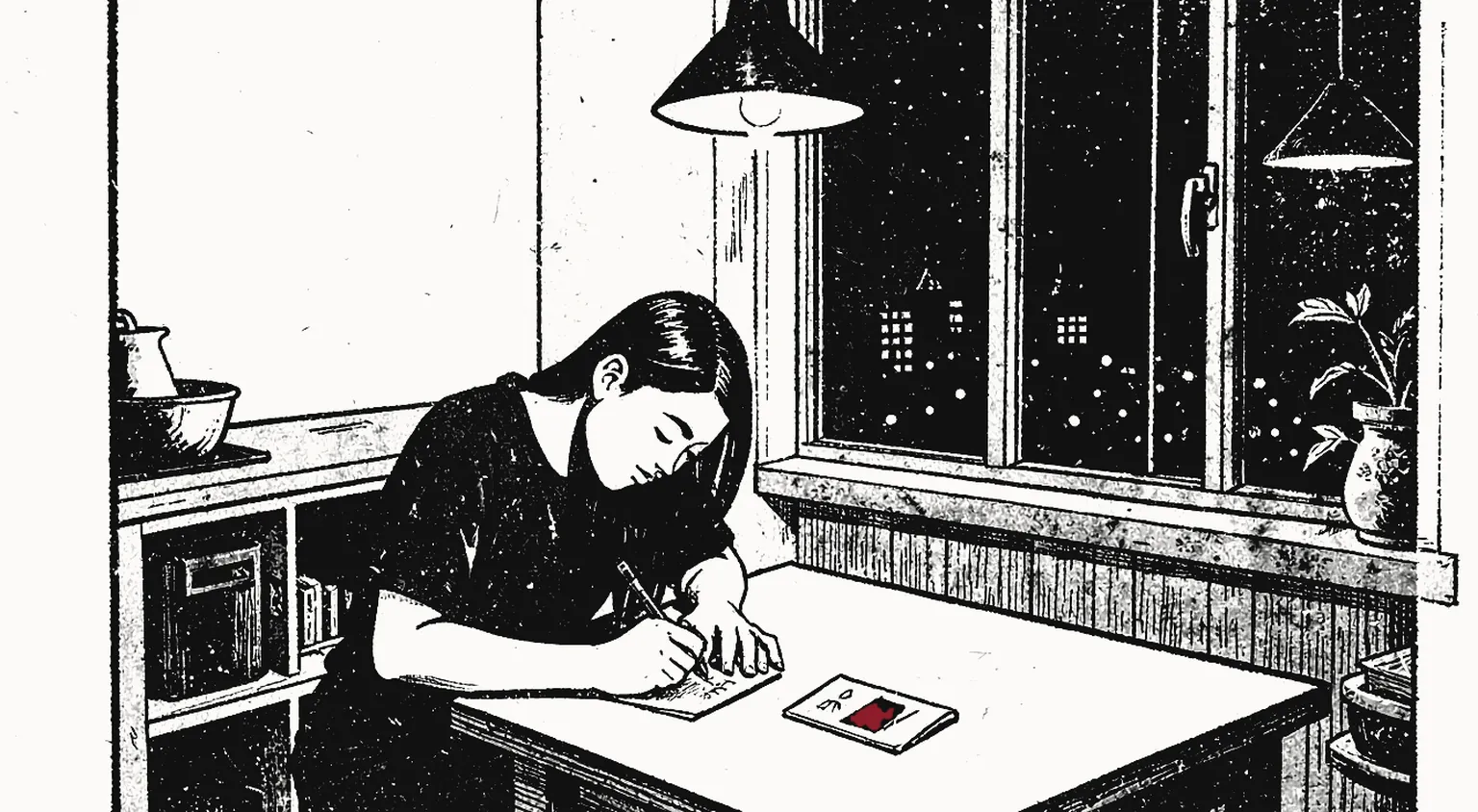
Mira has an offer from a company she likes. The salary is a little low. She is afraid to push, because she has no other offer, and she tells herself that any job is better than none.
She is right about one thing. Without any alternative she has little to bargain with. But she has missed the useful part: she can fix that before she answers.
This is the idea behind the BATNA. In Getting to Yes, Roger Fisher and William Ury say your real power in a negotiation is not your title, your size or your confident voice. It is what you can do if the other side says no. My rule here is simple: before you ask, make your plan B real.
Everything below works the same for a man or a woman, a new hire or a manager. It also works outside work, in a rent talk or a contract.
The short answer
- Name your BATNA. Write what you will do if the deal fails, as one sentence.
- Make it real. An actual offer, quote or draft beats a vague hope.
- Guess theirs. Their alternative sets how much they need you.
- Set a trip-wire. Pick the point where you stop and think, not where you panic.
- Use it calmly. You rarely need to say it. You need to know it.
DiagramBuilding a BATNA
- List. Write every way you could get what you want without this deal.
- Pick. Choose the best one. That is your BATNA.
- Improve. Turn it into something concrete. Ask, apply, get a quote.
- Compare. Judge each offer against it, then decide whether to walk.
Fisher and Ury describe these as three habits: invent options, pick the best, and improve it. We add the last step, which is to compare every offer to it.
Step 1: Name it in one sentence
Most people say "I will see what happens." That is not an alternative. It is a hope.
A real BATNA fits in one line: "If this offer stays at this level, I will take the other interview next week, and if that fails I will keep my current job and ask again in six months."
Fisher and Ury say a BATNA is a better test than a fixed bottom line. A bottom line is a number you invent in advance. A BATNA is what you will actually do, so any odd offer can be compared with it fairly.
Step 2: Make it real
Getting to Yes gives a famous case. A town and a company argued over taxes on a factory. The town knew exactly what it would do if talks failed: move the town limits to include the factory and tax it at the full rate, about $2,500,000 a year. The company had no plan B, because it had committed to keeping the factory and built no alternative. The authors conclude the company's large assets did little good because it never turned them into a good alternative.
Be honest about the evidence. The book uses short examples and thought experiments, such as two job interviews, and no studies. Its claim that your alternative is mostly what decides power is argued, not proved. It is a strong idea you can test against your own life.
To make yours real, do one thing this month that turns the idea into paper. Apply to one job. Ask for one quote. Draft one proposal. A small, true alternative beats a long list of maybes.
For a salary version of the same move, see how to ask for a raise.
Step 3: Guess their BATNA
The other side has one too. If your employer can hire a good replacement in a week, your alternative has to be stronger to matter. If they would lose a big client when you leave, you hold more.
Fisher and Ury admit this part is hard. The BATNA chapter says some gaps cannot be closed, and it gives little help in judging how good the other side's alternative really is. Treat your guess as a guess. Look for facts: how long the role has been open, how many people can do it, what a delay costs them.
The book also notes that you can sometimes change their alternative. In one short story a father stopped leaving his wallet out after his son said he could take money from it, and the son then mowed the lawn. It is a small example, and it should be used carefully. Our rule stays the same as in the rest of the site: see it, name it, answer it. Do not use this to trap a person.
Step 4: Set a trip-wire
Chris Voss, in Never Split the Difference, warns about spending hours on a deal. He gives a car lot case: you have a written $10,000 offer for your old car from another dealer, and after long hours with the first dealer, you have already given up everything above that number in your head.
His point works well here. Write a trip-wire before the talk: "If the offer drops below this or the time passes this, I stop and think." It works as a signal to check your plan before you slide into a bad yes.
Other negotiation teachers would add that a high goal helps too, and that an extreme opening can damage trust if it looks like a bluff. Aim high, but be able to explain your number with facts. For more on this, see our review of Never Split the Difference.
Step 5: Use it calmly
A strong BATNA mostly works silently. You sound relaxed because you are. You ask for what you want, you listen, and you can wait through a pause.
You can say it when it helps: "I have another option I take seriously, and I would prefer to work it out with you." Say it only if it is true and better than they think.
This is Know Your End First: the person who knows what they will do if talks fail negotiates from a steadier place. For the full process around it, see the negotiation guide and our Getting to Yes review.
The same idea for limits
The BATNA idea works outside money too. Robert Glover, in No More Mr. Nice Guy!, describes people who cannot walk away because they need approval, so they give in and keep a quiet score. George Simon, in In Sheep's Clothing, says to stop hoping the other person will change, say what you will do, and judge by behaviour over time.
In personal life your plan B is a limit you can carry out: "If this happens again, I will do that." The action must be in your control, and it helps to tell one trusted person. Both books rely on client stories, and the cases tend to end well, so they say little about people who are violent or unstable. If you are not safe, that is a different problem, and you need real support, not a negotiation tactic.
Your callWhat would you do?
You have a job offer and want a higher salary. You have no other offer. The recruiter says the number is final and she needs your answer by Friday.
Weaker move. Lever 2 is missing. You never checked what the offer is worth compared with your alternatives, so fear made the choice.
Strongest move. Lever 2 and Lever 4. You build a real alternative before you decide, and you stay calm and respectful.
Weaker move. This is a bluff. If she asks for details or calls it, you lose trust and the deal.
Your callWhat would you do?
A supplier raises his price by 20 percent. You have used him for years and switching feels like a hassle.
Weaker move. Lever 2 is missing. You never priced your alternative, so the hassle decides for you.
Strongest move. Lever 2. Your option is real, and you give him a way to keep you.
Weaker move. A threat with no plan is a bluff, and he may call it.
The dark version
Drill
A cleaner way to feel strong
Next, read How to Ask for a Raise, then The Negotiation Guide.
Questions people ask
What does BATNA stand for?
Best Alternative To a Negotiated Agreement. It is the best thing you can do if the talks fail. Roger Fisher and William Ury introduced the term in Getting to Yes.
Is a BATNA the same as a bottom line?
No. A bottom line is a fixed number you pick in advance. Fisher and Ury argue a BATNA is a better test, because you compare every offer with what you will really do otherwise, so an odd offer can still be judged fairly.
Should I tell the other side my BATNA?
Only if it is better than they think. Getting to Yes says sharing it helps when it is strong and does harm when it is weak or not real. If it is weak, work on it first.
What if I truly have no alternative?
Then build one before the talk, even a small one, such as a quote, an application or a draft. Some gaps cannot be closed, for example one employer in a small town. In that case aim for the best deal you can get and be honest with yourself about the limits.
Sources: Getting to Yes; Never Split the Difference; No More Mr. Nice Guy!; In Sheep's Clothing. Ideas summarised in our own words.
This page trains Lever 2: Know Your End First. Goal, minimum, walk-away line — before any move.
Also: Name the Feeling.
Next lever: See the Dark Move
Find your weakest lever
12 questions, 2 minutes. You get your type and the one lever to train first.
Take the Influence Score