Money & Negotiation / Complete guide
Negotiation Guide: How to Get a Better Deal Without Burning Anyone
A practical negotiation guide for salary, deals and everyday asks: know your walk-away, build options, read the feeling, and keep the relationship.
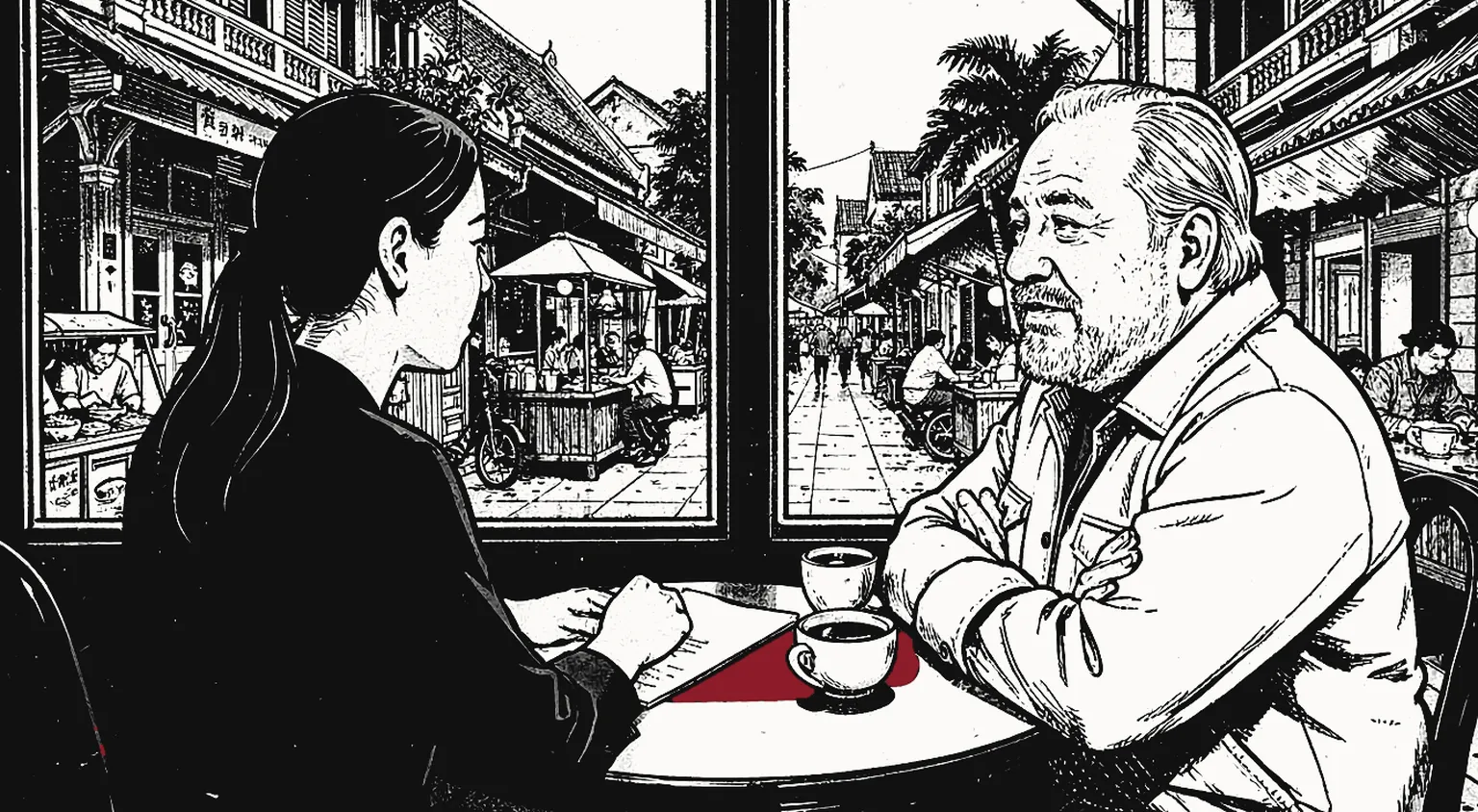
Whoever needs the deal more loses. So the first job in a negotiation is not to talk better. It is to need it less.
Take Ploy. She has been offered a freelance contract. The client says, "Our budget is fixed. Take it or leave it." Her stomach tightens. She needs the work, she does not want to look greedy, and in ten seconds she will say yes to a deal she has not even thought about.
That moment is where most negotiations are lost. Not at the table, but in the minute before it, when you have no plan and no choices.
Negotiation is any talk where two sides want different things and both can still say no. That covers salary, contracts, rent, a supplier's price, and the question of who does the dishes. You do it every week. The only choice is whether you do it with a plan.
This guide gives you one. It draws on three books that disagree with each other in useful ways: Getting to Yes by Roger Fisher and William Ury, Never Split the Difference by Chris Voss, and You Can Negotiate Anything by Herb Cohen. I have no loyalty to any of them. We took what holds up, flagged what does not, and tied it to the 9 Levers.
The short answer
- Prepare your end first. Write your goal, your minimum and your plan B before you speak. This is Know Your End First.
- Build a real alternative. One actual offer or option beats ten vague hopes. This is Keep Your Options.
- Find the interest behind the demand. Ask why. The stated position is rarely the real need.
- Name the feeling. Say out loud what they seem to feel, then stop talking. This is Name the Feeling.
- Ask "how" and "what", then agree on something checkable. Shape the deal with questions and fair standards, not with pressure.
DiagramThe calm negotiation
Five steps. The first two happen before the meeting, the last three inside it.
Step 1: Know your end before you start
Most people walk in with a number in their head and nothing else. That is a hope, not a plan.
A plan has three parts. Your goal is what you would be glad to get. Your minimum is the least you would accept. Your walk-away is what you will actually do if the minimum is not met. The third part matters most, and it is the one people skip. My rule: never sit down until you can finish the sentence "If they say no, I will..."
Fisher and Ury make this point in Getting to Yes. They say a fixed "bottom line" has two problems: it makes you stop listening, and it is often set badly. A better test is your best alternative to a deal, which they call the BATNA. You compare every offer to that, not to a number you wrote at midnight.
Getting to Yes gives a case worth remembering. A town negotiated with a company whose factory sat just outside its limits. The company looked stronger on paper. But the town's plan B was to move the town line and tax the factory, and the company had built no plan B at all. The town raised the yearly payment from $300,000 to $2,300,000. Treat this as a vivid story from the authors, not a study. The lesson still holds: the side with the better alternative has the real power.
Step 2: Build your alternatives
Power in a negotiation is mostly the freedom to leave. If you need this one deal, you will take a bad one. If you have another, you can calmly decline.
Cohen says the same in You Can Negotiate Anything: competition and options are among the biggest sources of power, and most of that power lives in what the other side believes. If they think you have no choice, you have no leverage, even if you do have one.
This is the part most people hate hearing: your skill at talking matters less than your choices. So build the option before the talk, not during it. Get a second quote. Take the other interview. Draft the plan for doing it yourself. This is Keep Your Options in practice.
Be honest with yourself about how strong the option is. Getting to Yes warns that people add up all their possibilities ("I could move to Paris, or a farm") when they can only pick one. Count the one you would really do.
Step 3: Find the interest behind the demand
A position is what someone says they want. An interest is why. In Getting to Yes the standard story is two people fighting over an open window in a library. One wants it open for air, the other wants it shut to avoid a draft. A librarian asks why, and opens a window in the next room. Both interests are met.
In money talks, the position is the number. The interest might be cash flow this quarter, looking good to a boss, or avoiding a precedent. If you only haggle over the number, you only get a number. If you find the interest, you can trade across other terms such as payment dates, scope, title, or time off.
Here is the thing: the number is almost never the whole story. Ask simple questions. "What matters most to you about this price?" "What would make this easy to approve on your side?" Then listen. Voss calls these calibrated questions: open "what" and "how" questions that let the other side work on your problem. They land softer than a blunt "why", which can sound like blame.
Step 4: Name the feeling
Voss spent twenty years as an FBI hostage negotiator. His claim is that people decide with feeling first and use logic to defend it afterwards. So he argues you should deal with the feeling before you argue the point.
His tool is the label. You say what the other side seems to feel, in a neutral way, and then you stay silent. "It sounds like this budget has been a headache for you." "It seems you are worried I will ask for more later." You are not agreeing. You are showing that you understand.
The first tool is the mirror: repeat the last few words they said, then wait. A student in his book used it on a boss who asked for two copies of every document. She said, gently, "Two copies?" and he explained, then admitted the client had not asked for copies at all.
Why does it work? Voss cites a brain-scan study from UCLA where naming an emotion shifted activity from the fear centre to the thinking areas. The study used pictures of faces, not tense negotiations, so the link to your salary talk is Voss's own reasoning. Still, anyone who has calmed down after saying "I am angry" knows the effect feels real.
Step 5: Shape the deal with questions and fair standards
Once you understand the feeling and the interest, steer. Two tools work well together.
Calibrated questions. In place of "You must lower the price", ask "How am I supposed to do that at this budget?" The other side has to think about your problem. In a story from Never Split the Difference, a nephew negotiating with his aunt's kidnappers in Haiti never named a number first. He asked how the family could pay if they hurt her. The price fell a long way. That is an extreme case. In an office, the same question works because it turns a demand into a puzzle.
Objective criteria. Getting to Yes says that when interests clash, argue about the standard, not about who is stronger. Market price, a published salary range, what a similar contract cost last year. "Can we agree what a fair rate looks like for this kind of work?" The authors admit that standards are not always objective, and that whoever picks the standard shapes the result. So come with yours ready, and be ready to test theirs. The price of this move is some patience: you must do the homework first.
Then close the loop. A "yes" is only worth something if it will be carried out. Voss says there are three kinds: a fake yes, a confirming yes and a real commitment. Test it with a "how": "How will we get this signed by Friday?" If they cannot answer, you do not have a deal yet.
Salary, deals and everyday asks
The same five steps apply across three common settings.
Salary. Do not fight only over the number. Voss's advice: keep asking, pleasantly, about other terms such as title, duties and how success is measured. His student Angel Prado raised the idea of a raise over months, and when he finally sat down he asked about the title first, then waited. His boss offered the raise first. See How to Ask for a Raise for the full plan.
Business deals. Know their alternative as well as yours. Ask what a good result looks like for them. Put the deadline and the next step in writing. Cohen advises hiding your own deadline. Voss cites research by Don Moore that finds hiding it raises the risk of no deal, so he says tell it. I side with Voss here: a clear timeline helps both sides, and a hidden one tends to create distrust.
Everyday asks. A hotel room, a late fee, a landlord. Cohen's best everyday point is that prices and rules were made by people, and people can change them. Be a person, not a number. Be friendly, give a reason, and if the first person cannot say yes, ask who can. A reason matters more than you would think: in Ellen Langer's copy-machine experiment, described by Cialdini in Influence, people let someone cut a line far more often when a reason was given, even a weak one. It is one study, but it fits daily life.
When the other side is stronger
You do not need to be bigger to negotiate well. Getting to Yes is blunt: no method works when all the leverage is on the other side. But a method can stop you from signing a deal you should refuse, and help you get the most from what you have.
Three practical moves. Improve your alternative, even a little. Be clear on your walk-away so pressure cannot move it. And stay calm, because the other side's pressure is often a test. If you are being attacked in a meeting, see Stay Calm When Attacked in a Meeting.
Where should you be careful with these books? Both have thin evidence. Voss's proof is mostly stories told by the person who won. The Harvard authors' proof is mostly chosen cases. Neither says how often the method fails. Voss's best-known wins also come from hostage work, where there are no long-term relationships. Your boss is not a kidnapper, and you will see her on Monday. Read our reviews of Never Split the Difference and Getting to Yes for the full comparison.
Your callWhat would you do?
A supplier says your price is "impossible" and raises his voice. You were ready to talk about numbers.
Weaker move. Lever 4 is missed. The feeling is the problem right now, and a chart will bounce off an angry person.
Strongest move. Lever 4 and Lever 1. You name the feeling without agreeing to the demand, stay calm, and open space to learn his real interest.
Weaker move. Lever 2 is missing. Without a minimum and a plan B you pay for peace with your own goal.
The dark version
Every move above has a dirty twin. You will see these in almost every serious negotiation, and calm is the best defence.
Go deeper
- How to Ask for a Raise: the salary version of this plan.
- Never Split the Difference review: Voss's toolkit, tested.
- Getting to Yes review: the Harvard method and its limits.
- Stay Calm When Attacked in a Meeting: keep your head when the other side pushes.
- Power at Work: how these skills fit your career.
Questions people ask
What is the first thing to do before any negotiation?
Decide your goal, your minimum and what you will do if there is no deal. Getting to Yes calls that last part your BATNA. Without it you cannot tell a good offer from a bad one.
Should I make the first offer?
It depends on how well you know the market. If you know the range, a first offer sets the anchor in your favour. If you do not, ask a question first and learn the range before you name a number.
Is it rude to negotiate salary?
No. Employers expect it, and the first offer is rarely their best. Be friendly, give a reason, and ask about the whole package, not only the number.
What if the other side is much more powerful?
Your power is your best alternative, not your title or your size. Build one real option before the talk, and you can negotiate as an equal even from a weaker seat.
Is negotiating the same as manipulating?
No. Manipulation hides facts or pushes fear. Negotiation can be honest: you ask good questions, show your reasons and keep your word. Tricks win once; trust keeps winning.
Sources: Never Split the Difference; Getting to Yes; You Can Negotiate Anything. Ideas summarised in our own words.
This page trains Lever 2: Know Your End First. Goal, minimum, walk-away line — before any move.
Also: Keep Your Options, Name the Feeling.
Next lever: See the Dark Move
Find your weakest lever
12 questions, 2 minutes. You get your type and the one lever to train first.
Take the Influence Score