Social Power / Book review
The Charisma Myth Review: Is Charisma a Learnable Skill?
The Charisma Myth by Olivia Fox Cabane
TrainsWarm + Strong · Perception Rules
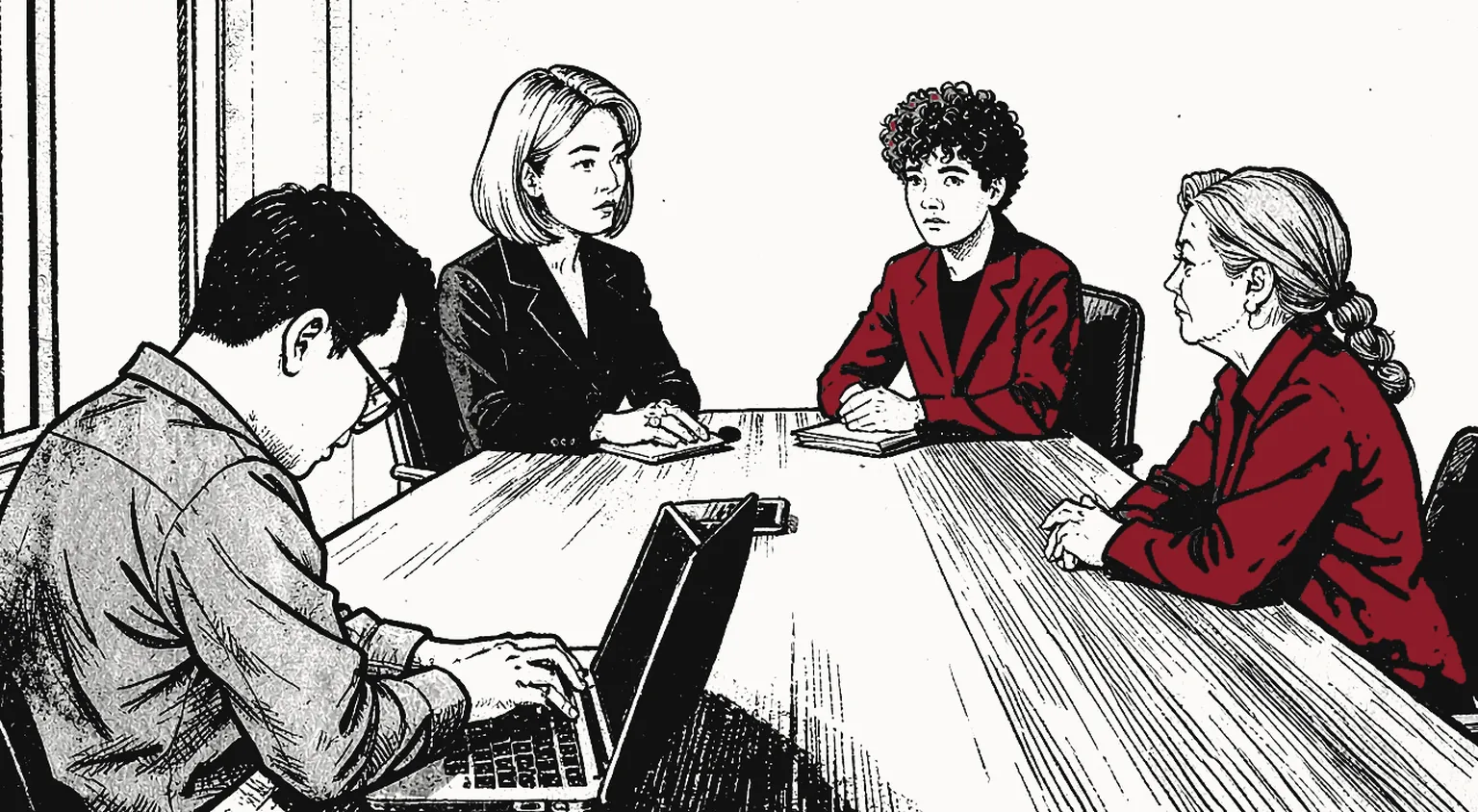
Think of the last meeting where one person made everyone else lean in. She did not shout. She did not even talk much. She listened as if nothing else in the building mattered, and people left feeling sharper than when they came in. The Charisma Myth by Olivia Fox Cabane is a book about that effect, and its claim is bold: you can learn it. This review covers what holds up, where it is weaker than it sounds, and how to use it without turning into a performer.
DiagramThree parts, one inner state
The book's order matters. Fix what you feel first, and the body signals follow.
The book in 5 points
- Charisma is a set of behaviours. Cabane says it is not a gift handed out at birth. Even famous people can be ignored one day and adored the next, so something other than magic must be at work.
- It has three parts. Presence, power and warmth. Presence is the base, because without it the other two look fake.
- Your body tells on your mind. Tension, boredom and worry leak out in tiny facial signals. People may not name them, but they feel them. The book says you cannot fake your way past this, so you work on the inner state.
- There are four styles. Focus (full attention), visionary (strong belief), kindness (warm acceptance) and authority (status and command). You pick the one that fits you and the moment.
- It can be trained. The tools are small: a one-minute attention drill, visualising a calm state before an event, kindness aimed at yourself, and a few habits for voice, posture and handshakes.
What it gets right
1. Making the other person feel clever beats showing you are clever. The best story in the book is two rivals for the top job in Victorian politics, Gladstone and Disraeli, who each took the same young woman to dinner. She said Gladstone left her thinking he was the cleverest man in England. Disraeli left her thinking she was the cleverest person in England. Disraeli won. It is one anecdote, but the pattern is real: people remember how you made them feel about themselves. That is the engine of Lever 5, Warm and Strong.
2. Presence is the cheapest upgrade you have. Most of us spend a conversation half somewhere else. Cabane cites a large study in which people reported their minds wandering nearly half the time. The fix she gives is small and testable: when you notice drift, use one second on your breath, then return to the person. You can try it at your next meeting. The cost is zero and the effect on the other person is usually visible within minutes.
3. The styles take the pressure off. Not everyone can be the loud visionary. John Kerry, in her telling, tried to dumb down his careful, intellectual manner during a presidential campaign and looked stiff for it. That is a useful warning. A quiet person who listens hard is already running a style that works. This links to Lever 6, Perception Rules: people judge the signal they receive, so give the signal that is true for you and sharpen it.
Where it breaks
1. The evidence is mostly stories. - Claim: anyone can raise their charisma, and a deep change can arrive in about three months. - Test: the proof is the author's coaching clients, famous-person anecdotes and a few lab studies mentioned in passing. The three-month promise rests on one client story. Deep social anxiety can take years of real help. - Better rule: treat each habit as a two-week experiment. Keep what changes how people respond to you. Drop the rest.
2. The mind-first, body-second logic points two ways. - Claim: change your mental state and your body language will follow. - Test: the same book later cites work saying posture changes feelings. If both are true, the order is not fixed, and the book never says which to use when. - Better rule: use both. If you are too tense to feel calm, change the body first: slow your breathing, drop your shoulders. If you are calm, check the signals still match.
3. Warmth is not a tool for every room. - Claim: attention and goodwill turn difficult people and hard situations around. - Test: Cabane admits it may not work on someone malicious. In a legal fight or a tough negotiation, warmth can be read as weakness. The authority style also shuts down feedback, which she flags and then covers lightly. - Better rule: match warmth to the other person's incentives. Be warm to people who can answer warmth. Be steady and plain with those who cannot.
Smaller gaps: the handshake and dress advice is North American, and it will not travel to every culture. The book also leans on celebrities, who are a poor test of an ordinary Tuesday.
A real-world check
Our take
The room reacts to you before it hears you. Your face has set the temperature before you have said a word, which is the thermostat idea: the calmest person in the room sets the mood for everyone else. Cabane teaches you to be that person on purpose.
Your callWhat would you do?
You walk into a room of senior people for a pitch. Your hands are cold, your head is full of your first slide and you know you look tense.
Weaker move. Lever 6 is missed. The room reads your tension first, and it may read it as a reaction to them.
Strongest move. Lever 1 and Lever 5. You calm the body, turn attention outward and start warm and steady.
Weaker move. Lever 6 backfires. A style that does not fit you reads as fake, as the Kerry story shows.
How to use it without becoming a jerk
Lever map
| Book idea | Lever | Verdict |
|---|---|---|
| Presence: calm inner state first | 1 Calm Is Power | Strong. Start here. |
| Make the other person feel clever | 5 Warm and Strong | Strong. The best idea in the book. |
| Four charisma styles | 6 Perception Rules | Good. Pick the one that is true for you. |
| Visualise before a big event | 1 Calm Is Power | Plausible and cheap. Test it for yourself. |
| Dress and handshake for first impressions | 6 Perception Rules | Useful, but local. Check your culture. |
| Warmth to defuse hard people | 5 Warm and Strong | Works on some. Weak against bad faith. |
Who should read it
| Reader | Verdict |
|---|---|
| Beginner | Yes. Read chapters 1, 2 and 8 first, then try one habit a week. |
| Experienced | Yes, for the styles chapter. It explains why your approach works in some rooms and flops in others. |
| Skeptic | Read it as a habit list. Ignore the three-month promise and test the claims on yourself. |
Read next
- How to make a strong first impression: the first ten seconds, step by step.
- How to be respected and liked: warm and strong in daily practice.
- Influence review: the other big book on why people say yes.
Questions people ask
What are the three parts of charisma in The Charisma Myth?
Presence, power and warmth. Presence is being fully here with the person. Power is the sense that you can affect things. Warmth is visible goodwill. The book says you need a mix of them, and the mix changes with the situation.
Can an introvert be charismatic?
The book says yes. It describes a focus style built on full attention and careful listening, which suits quiet people well. The claim rests on examples more than on measured studies, but it matches what most of us have seen in a good listener.
Is The Charisma Myth worth reading?
Yes, if you freeze in rooms or feel overlooked. Use it as a set of habits to try, not as proof. Most of its evidence is stories and the author's coaching work.
Sources: The Charisma Myth. Ideas summarised in our own words.
This page trains Lever 5: Warm + Strong. Warmth AND strength. Only one makes you a pushover or a bully.
Also: Perception Rules.
Next lever: Perception Rules
Find your weakest lever
12 questions, 2 minutes. You get your type and the one lever to train first.
Take the Influence Score