Career & Status / Guide
How to Make a Strong First Impression at Work
People judge you in seconds and rarely revise. Five honest steps to start well in a new job, meeting or interview, for women and men, with no faking.
TrainsPerception Rules · Warm + Strong · Calm Is Power
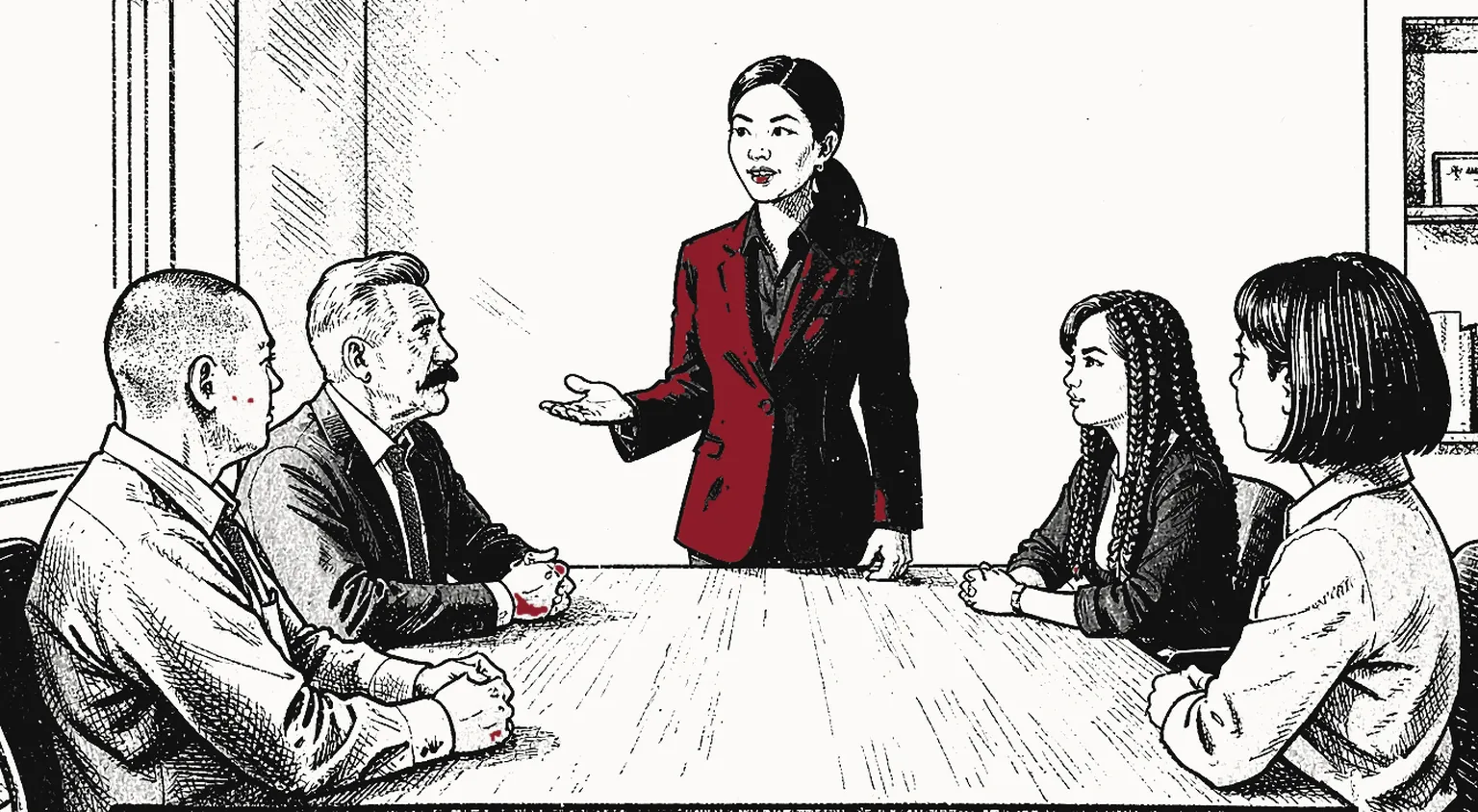
Ploy starts a new job on Monday. Her manager, Arun, shakes her hand while looking at his phone, and she answers in a small voice. Neither of them thinks about it again. But in the next three weeks, Arun will read her emails and her silences in the light of that first minute.
First impressions are unfair and fast. People decide who you are, and whether you are safe, before you have said anything useful. Once they decide, they tend to defend that view.
So should you fake a polished persona? No. A mask cracks in week two, and then you have a second bad impression to fix. The better path is to choose the impression you want, then make it easy to see. My rule: tell people the truth about you, in the clearest possible form, in the first minute.
This works for any new first contact at work: a job, an interview, a first meeting with a client or a new boss. The aim is to be read correctly.
The short answer
- Decide the one impression you want. Calm, prepared or fair, for example.
- Match the room. Dress, tone and pace should say "I belong here."
- Open warm. Greeting, eye contact, a firm handshake or local equivalent.
- Be specific early. One clear, concrete thing beats ten vague ones.
- Back it up by day three. Do what the first minute promised.
DiagramTwo quick questions the brain asks
Cabane describes the first two questions as a quick friend-or-foe check, then a check on power. The last two are our reading of her point that people defend their first view.
Step 1: Decide the one impression you want
Robert Greene's The 48 Laws of Power starts from a blunt claim: people cannot see inside you, so they judge what they see. That sounds cynical, but it is also practical. If people only get a thin slice of you, you get to choose which slice.
Pick one word before the event. Not ten. "Prepared" is a good one for a new hire. "Fair" is a good one for a new manager. Then ask what visible thing would show it: a short list of questions, a notebook with your name on the first page, an opening line.
This is Perception Rules: people judge from what they can see, so decide what they will see.
Step 2: Match the room
Cabane's term is "tribal wear." Clothing tells the other person whether you belong to their group, and the brain files an outsider under foe until shown otherwise. Her examples are short, and some read as anecdotes: a Danish manager who found people listened more when he wore a suit than when he dressed casually.
So look before you dress. In a bank, wear what the bank wears. In a start-up, wear what the team wears. Language works the same way. She tells of a banker who matched her brusque boss's military vocabulary, and within a week he called her one of his people. That is one story, so treat it as an idea to test.
Be careful with the limit. Her advice leans toward fitting in, and in creative fields it can be wrong. If your edge is being different, dress different on purpose, and know why.
Step 3: Open warm
The first seconds should say "friend." Cabane gives a long handshake guide, and the core is simple: keep your palm vertical, make eye contact, grip firmly without crushing, and let go after a moment. She names the common errors: the limp "dead fish," the over-hard squeeze, the palm-down handshake that tries to dominate, and the two-handed grab that feels invasive.
She also cites a Fortune 500 CEO who chose between equal candidates by the handshake, and an analysis of interviews where handshakes counted heavily. The summary notes the advice is North American. In a culture with a bow, a nod or no touch, do that, and do it with the same warmth.
Warmth matters most here. Look at the person, say their name, and let your face move. Warmth plus strength is Warm and Strong: friendly without being soft, firm without being cold.
Step 4: Be specific early
Vague people are forgotten. In your first conversation, include one detail only you could give: the project you shipped, the problem you want to solve here, the question you have been thinking about. It gives people something to remember and something to ask you about.
Keep it short and true. Do not inflate. Cabane's logic runs the other way: people link you to the feeling you gave them, so the feeling has to survive the first week.
Step 5: Back it up by day three
A first impression is a loan. People give you credit on the first minute and then check. Cabane cites Galbraith: people prefer to prove their first judgment right. That helps you if the judgment is good, and it makes a bad start hard to undo.
So make the next three days match. If you looked prepared, send the follow-up the same day. If you looked fair, apply the same rule to the first awkward case. This is how the image turns into a reputation, and how it joins how to get promoted, which is mostly about what people have seen you do.
If you did make a poor start, say so: "I was nervous on Monday. I would like to start again." It costs a little pride and corrects the record. Do not argue about it for weeks.
Your callWhat would you do?
It is your first day. A senior colleague, busy, gives you a quick nod in the corridor and says, "Welcome, come to me if you need anything."
Weaker move. Lever 6 is lost. You gave them nothing to remember, and avoidance reads as cold.
Strongest move. Lever 5 and Lever 6. Warm, specific and easy to say yes to.
Weaker move. Lever 1 is missing. You are performing, and a busy person feels pushed.
Your callWhat would you do?
In a job interview, the panel is friendly but one interviewer sits with folded arms and says little. You feel your confidence slipping.
Weaker move. Lever 1 is lost. Speed signals nerves, and it makes the quiet one more doubtful.
Weaker move. Lever 6 backfires. You copy a cold signal and make the room colder.
Strongest move. Lever 1 and Lever 5. Calm, warm and specific. One reaction tells you little, so do not rewrite your whole performance around it.
The dark version
The line is your own motive. Choosing what to show is fine. Showing what is false is not, and that is where the dark moves in the 48 Laws start.
Drill
A cleaner way to start
Next, read How to Get Promoted, then Power at Work.
Questions people ask
How long does a first impression take?
Seconds. In The Charisma Myth, Olivia Fox Cabane cites a Harvard study where students rated a teacher from a two-second silent clip much as other students did after a full semester. It is one study, but it matches what most people have felt.
Can I fix a bad first impression?
Yes, but slowly. Cabane cites Galbraith's point that people prefer to prove their first judgment right. So you need several clear, consistent signals over time, and an honest word about what went wrong helps.
Does a handshake really matter?
In her book it does: she cites a University of Iowa analysis of job interviews where handshakes counted heavily. She also says the handshake advice is North American. In other cultures, follow local greeting habits.
Should I dress like everyone else?
Mostly yes, in a new setting. Cabane calls clothing 'modern-day tribal wear' that tells people you belong. In creative fields, standing out can be an advantage, so read the room before you copy it.
Sources: The Charisma Myth; The 48 Laws of Power. Ideas summarised in our own words.
This page trains Lever 6: Perception Rules. People react to how strong you look, not how strong you are.
Also: Warm + Strong, Calm Is Power.
Next lever: Go Around, Not Through
Find your weakest lever
12 questions, 2 minutes. You get your type and the one lever to train first.
Take the Influence Score