Social Power / Guide
How to Be Respected and Liked: Warm and Strong
Only-nice people get walked on, only-tough people get resented. How to be warm and strong at once, with scripts for work, friends and family.
TrainsWarm + Strong · Perception Rules
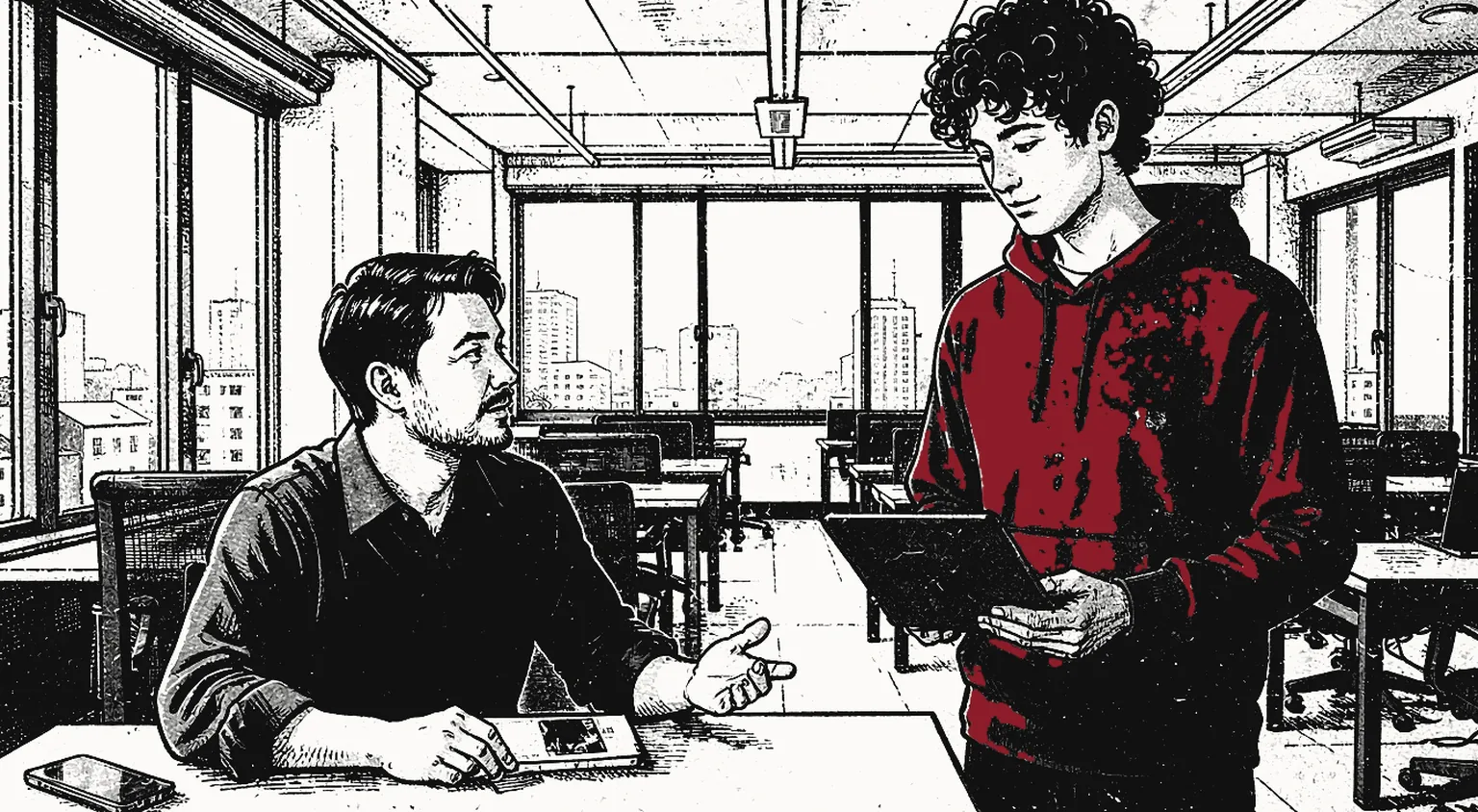
Mei is the kind person on her team. She covers shifts, takes the extra tasks and never complains. Last month the manager gave the promotion to Jon, who is less helpful but says exactly what he wants. When she asked why, the manager said, "Everyone loves working with you. I just did not see you as a leader."
Mei was liked. She was not respected. And Jon, on the other side, is respected by some and avoided by others. Neither has the full thing. (Both are composite stories.)
The uncomfortable truth: every group keeps a quiet ledger, and kind people who never say no slowly become the account everyone draws from. The cynical answer is to turn hard. That fails too, because people do not follow someone they only fear. I think the third way is the only one that lasts, and it costs you something: some people will like you a little less on the day you first say no.
This guide is about getting both. It trains Warm + Strong and Perception Rules.
The short answer
- Warmth and strength are two separate dials. You turn up both.
- Show warmth with attention, not with constant agreeing.
- Show strength with limits, not with volume.
- Say your needs out loud. Hidden needs turn into resentment.
- Be consistent. Respect is built by doing what you said, again and again.
Why only-warm and only-strong both fail
Think of two dials: warmth, and strength.
High warmth, low strength. People like you, but they do not plan around you. They ask for favours, push deadlines and decide things without you. You do not feel a victim at first, but over time you feel unseen. Robert Glover, in No More Mr. Nice Guy!, calls the pattern the Nice Guy Syndrome: a hidden belief that if you please everybody and hide your flaws, you will be loved and your needs will be met. He says it does not work, because the giving comes with strings and people sense it. His evidence is his own clients and theory, with no study, so treat it as a sharp description more than a proven law. But many readers recognise it at once.
High strength, low warmth. People obey, then avoid you. They do the minimum and share bad news late. They may fear you, but they do not follow you when it is hard. Olivia Fox Cabane, in The Charisma Myth, makes a clear contrast: she describes Gladstone and Disraeli at dinner. Both had power. Gladstone impressed his dinner companion, but Disraeli made her feel clever and interesting, and he was the one people wanted to follow. (That is her anecdote, not an experiment.)
Both high. People relax around you and also take your word seriously. This is what Cabane calls presence, power and warmth working together.
Both low. People forget you. That is another problem, and the first step is to pick one dial and move it.
DiagramTwo dials, four results
Turn up both dials. Moving only one gives you a known problem.
Step 1: Learn what warmth really is
Many people think warmth means being agreeable. It does not. Cabane defines warmth as goodwill toward others, and says people feel it through your attention and your body language, not through your words alone.
Warmth in practice:
- Full attention. Phone away. Eyes on the person. Let them finish.
- Making them feel good about themselves. Cabane says people link you to the emotions you trigger in them. Ask what they think and listen to the answer.
- Small, real kindness. Remembering a detail. Thanking someone specifically.
You can be warm and still disagree. That is the point.
Step 2: Learn what strength really is
Strength is not volume, height or a hard stare. In The Charisma Myth power means the ability to affect the world, and others read it in your calm, your steady voice, your slow movements and your clear decisions. In the method it also means holding a line you set in advance (see Know Your End First).
Signs of strength:
- You can say no without a long excuse.
- You say what you want in one sentence.
- You do not rush to fill silence.
- You stay steady when someone disagrees.
Robert Greene, in The Laws of Human Nature, makes a similar point about the way people judge us: they read confidence and attitude, then act on it. We should add that confidence read as arrogance backfires. Strength must come from being clear about what you will and will not do.
Step 3: Say your needs out loud
This is the missing piece for many warm people. In No More Mr. Nice Guy! Glover argues that hidden needs and secret deals ("I will do this for you, so you will do that for me, but I will not say so") are a form of control and breed resentment. Whatever you think of his theory, the practical fix is simple and testable: ask for what you want, in plain words.
Try this with something small:
- "I would like to be involved in that decision."
- "I need the report by Thursday, not Friday."
- "I would rather not host this time."
Then watch what actually happens. Glover says the feared result is usually larger than the real one. That is his claim from his clients, so check it yourself with one small request.
Step 4: Be consistent
Respect is built over time. It comes from the match between what you say and what you do. If you say you will deliver Friday and you do, you are strong. If you say you will say no and then say yes, you are weak, even if you are kind.
My rule: promise less, deliver all of it, and say no early rather than late.
This is also where Perception Rules works for you. People judge what they see, repeatedly. A small, steady pattern of clear limits and real kindness is seen far more than one big gesture.
Your callWhat would you do?
A friend keeps joking about your job in front of others. It stings, and you have laughed along each time so far.
Weaker move. Warmth with no limit. Hidden needs turn into resentment, and the jokes continue.
Strongest move. Warm and strong together. You state a need out loud, in few words, and you act on it if it repeats.
Weaker move. Strength with no warmth. You win the moment, but people learn you are dangerous, not respected.
Two more scenarios
The dark version
Drill
The clean version
Next, read The Art of Seduction: An Honest Review to see where charm turns into manipulation.
Questions people ask
Can you be respected and liked at the same time?
Yes, but it takes both signals. Warmth shows goodwill. Strength shows you hold your own lines. People who show only one end up either used or feared.
Why do nice people get walked over?
Because they hide their needs and avoid conflict, so others learn that pushing costs nothing. Niceness is not the problem. Having no limits is.
How do I say no without losing friends?
Say it briefly, kindly and without a long excuse. 'I cannot do that, but I can do this instead.' Real friends adjust. People who only liked your yes were never fully on your side.
Sources: The Charisma Myth; The Laws of Human Nature; No More Mr. Nice Guy!. Ideas summarised in our own words.
This page trains Lever 5: Warm + Strong. Warmth AND strength. Only one makes you a pushover or a bully.
Also: Perception Rules.
Next lever: Perception Rules
Find your weakest lever
12 questions, 2 minutes. You get your type and the one lever to train first.
Take the Influence Score