Career & Status / Guide
How to Deal With a Difficult Boss (and Keep Your Spine)
A five-step way to work with a boss who is hard to read or hard to please: understand their style, name the real issue and ask for what you need.
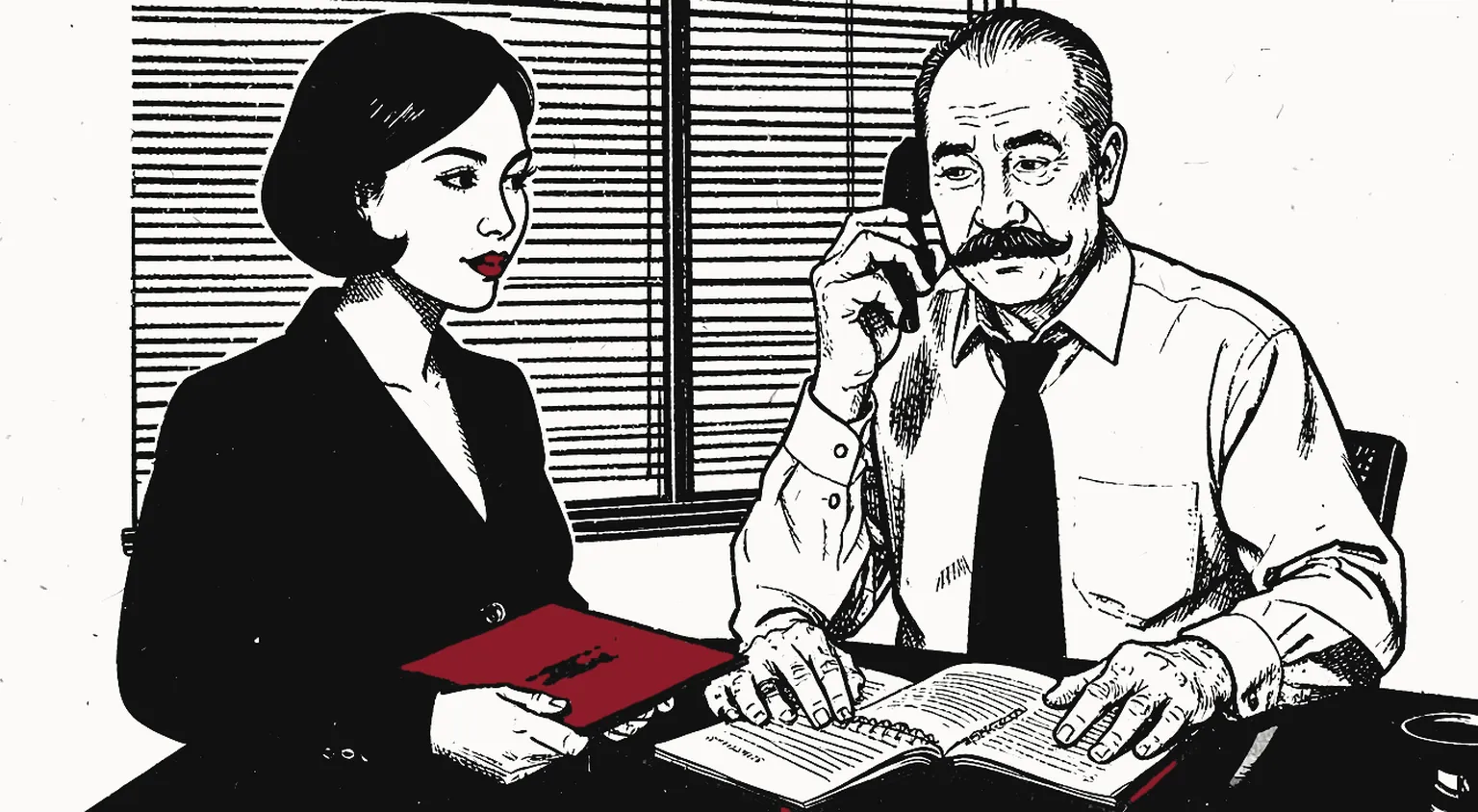
Mei's boss changes the brief the night before every deadline. Last week he told the whole team her report was "not what I asked for." It was exactly what he asked for, three weeks ago. Mei went home angry and spent the evening drafting a reply she never sent.
Most people have a boss like this at least once. The usual advice is to put up with it or to quit. There is a third option, and it is less dramatic than either: work out what is driving the behaviour, and then change the one part of the loop you control.
My rule: you cannot change your boss, but you can change what the two of you do together, and that is usually enough.
This page is for anyone whose boss makes work harder than the work itself. It is not a guide to manipulating someone with power over your pay. And if your boss is abusive, skip to the dark version below.
The short answer
- Stay calm first. You cannot read a person while you are angry at them.
- Read their style. Ask what pressure they are under and what they need from you.
- Separate what they did from what you assume. Facts first, theories last.
- Open with a shared goal. Name the problem as something the two of you have, not something they are.
- Ask for one specific change, then follow up in writing.
DiagramFrom friction to a working deal
The first two steps are about understanding. Steps three to five are the actual conversation. Skipping to the conversation without the first two is how a small friction becomes a feud.
Step 1: Stay calm first
Your boss controls your assignments, your reviews and often your pay. An angry reply feels good for ten seconds and costs months. Calm Is Power matters most when the other person has more of it than you.
Calm means you pick the time and the words. It does not mean silence or smiling through it. If your boss says something unfair in a meeting, you can say, "Let me check the thread and come back to you this afternoon." Then you do.
Step 2: Read their style
Thomas Erikson's Surrounded by Idiots starts from one useful idea: when you cannot understand someone, you tend to call them stupid, but they are usually just different. His tool is a four-colour sorting of behaviour (driven, social, steady, exact). I would use it lightly. The book gives almost no evidence, and most real people do not fit a single colour. Keep the question and drop the labels.
The question is: what does this boss need from me that I am not giving? Some bosses need speed and a one-line answer. Some need detail and no surprises. Some need to feel heard before they decide. Erikson's advice to meet people in their own style is sound, and it is not giving in. It is translation.
Notice what happened. Mei neither accepted the behaviour nor attacked it. She moved the information earlier.
Step 3: Separate what they did from what you assume
Difficult Conversations, by Douglas Stone, Bruce Patton and Sheila Heen, makes a point that most of us miss. In a fight, we talk as if we know the other person's intent. We do not. We know the impact on us. We can only guess what they meant.
"He wants to make me look bad" is a guess. "He said in the meeting that the report was wrong" is a fact. The first leads to a fight. The second can lead to a fix. The authors also say that both sides usually hold a story that makes sense from the inside, so the useful question is not who is right but how each of you got here.
Write two columns before you talk: what I saw and heard, and what I am assuming. Cross out any assumption you cannot test. Be honest about the book's limits here. Its examples are tidy and the other person usually stays open. A boss with real power may not, so keep your expectations modest.
Step 4: Open with a shared goal
The same book suggests opening with what a fair outsider would say about the gap between you, with no blame in it. They call it the Third Story. With a boss, it works like this: describe the problem as something that costs both of you.
Name the feeling if it helps, in a calm voice and about yourself: "I get tense when the brief changes late, because I do not want to let the team down." That is Name the Feeling, and it is much harder to argue with than "you stress me out."
Your callWhat would you do?
You are Ploy, a designer. Your boss praises your work in private, then in front of the group he calls it "a bit lazy." It has happened three times.
Weaker move. Lever 1 is lost. You answered a public sting with a public fight, and you gave him a story about you.
Strongest move. Lever 4 and Lever 1. You state what you saw, name the effect and ask for one change, calmly.
Weaker move. Lever 7 is misused. You are going around him by hiding, and it hurts your own results.
Step 5: Ask for one specific change and follow up in writing
Do not ask your boss to be a different person. Ask for one thing that is easy to do and easy to see: briefs by Friday, feedback in private, one priority list.
Then send a short note: "Thanks for today. To confirm, I will send the draft on Wednesday and you will tell me by Thursday noon if the direction needs to change." It gives you a record, and most bosses are glad of the clarity.
Give it two or three weeks. If the behaviour improves a little, say thank you. People repeat what gets noticed.
Your callWhat would you do?
You are Arun, a junior analyst. Your boss often sends you messages at 10 pm and expects a reply before morning. You have said nothing so far.
Weaker move. Lever 6 is working against you. He now sees "always available" as your normal, and the rule never gets set.
Strongest move. Lever 7 and Lever 4. You ask for a rule that serves the goal and you name your own limit calmly.
Weaker move. Lever 1 is missed. You avoid the talk and leave him to guess, so he fills the silence with his own story.
The dark version
This is the limit of the advice. Many difficult bosses are stressed, unclear or untrained. Some are simply bad for you. Part of the skill is telling which.
A cleaner way to carry this
Next, read Power at Work, then Office Politics.
Questions people ask
How do I handle a boss who micromanages?
Micromanagers are usually anxious about being surprised. Send short updates before they ask, and agree on what they will see and when. Often the checking stops once the surprises stop. If it does not, ask directly which decisions you can make without them.
Should I go over my boss's head?
Rarely, and never first. Going around a boss costs trust that is hard to rebuild. Try a direct talk and a written record first. Escalate when there is harm, a legal issue or a pattern of abuse, and do it through the proper channel.
Do personality types like the DISC colours really help?
Treat them as a prompt, not a diagnosis. Thomas Erikson's Surrounded by Idiots offers four colour types, but the book gives little evidence and the colours are fitted to people after the story is told. The useful part is the habit of asking what this person needs from you.
When is a boss too difficult to stay with?
When the pattern includes threats, humiliation, discrimination or damage to your health, and a clear talk changes nothing. Then your job is to document it, use HR or a lawyer if you can, and start planning your exit.
Sources: Difficult Conversations; Surrounded by Idiots. Ideas summarised in our own words.
This page trains Lever 1: Calm Is Power. Stay calm. Act on advantage, never on emotion.
Also: Go Around, Not Through, Name the Feeling.
Next lever: Know Your End First
Find your weakest lever
12 questions, 2 minutes. You get your type and the one lever to train first.
Take the Influence Score