Social Power / Guide
How to Say No Without Losing Respect (Scripts That Work)
A clear, polite no earns more respect than a vague yes. Five steps, short scripts for work and home, and the cases where a no costs too much.
TrainsWarm + Strong · Calm Is Power
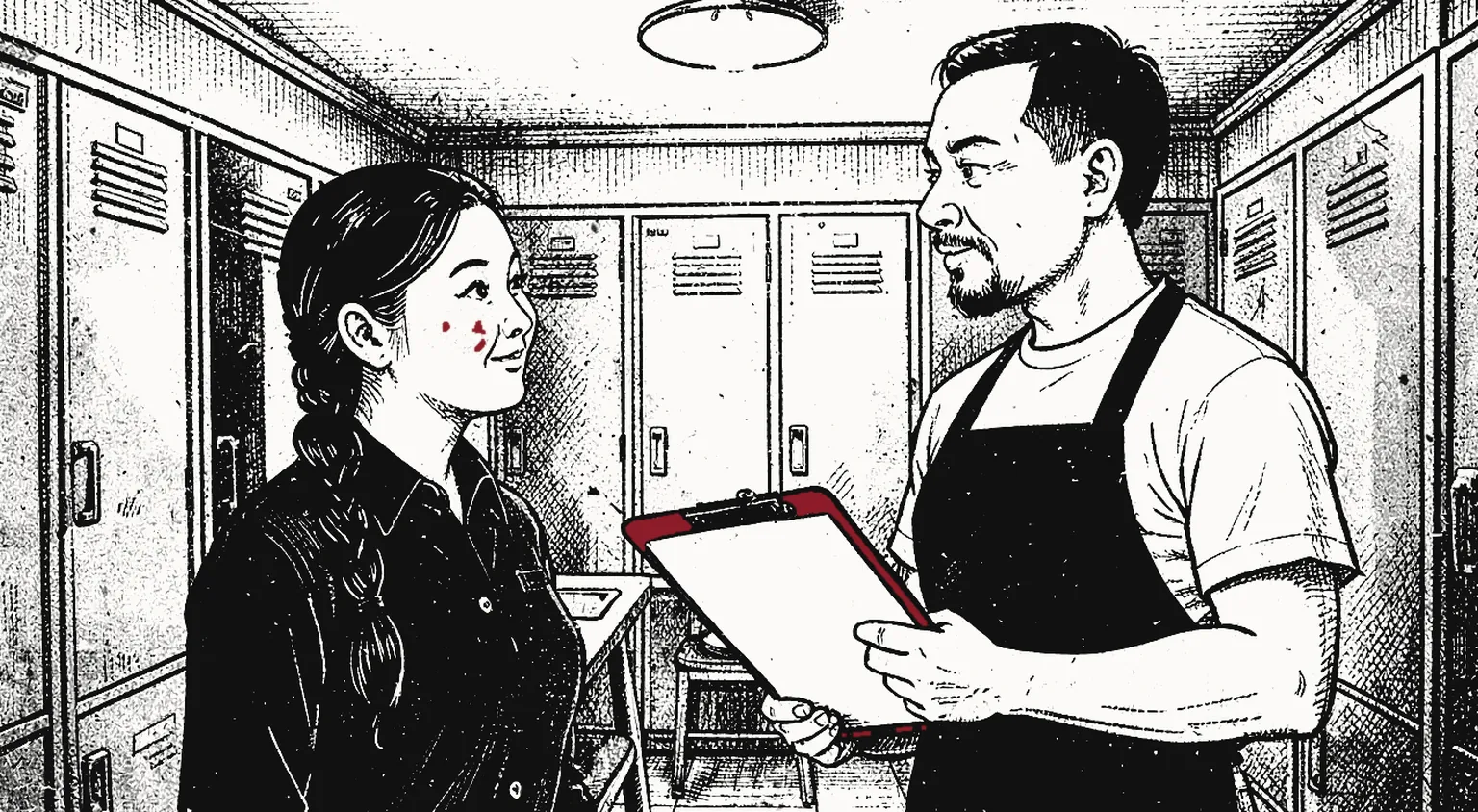
Ploy is asked, for the fourth time this quarter, to cover a colleague's shift on her one free evening. She feels her stomach drop. She hears herself say, "Sure, no problem." On the way home she is already angry, and nobody knows why.
Most people say yes when they mean no. They do it to avoid a few seconds of awkwardness, not because they want to. The bill arrives later, as an evening lost or a quiet resentment.
Here is the uncomfortable truth. In most rooms, the person who can never refuse is not seen as generous. They are seen as available. Availability is not respect.
So should you start refusing everything? No. People who refuse by reflex are tiring, and they miss good chances. The third way is a clear no, said warmly, for a reason you can name. My rule is simple: a vague yes costs more than a clear no.
The short answer
- Know what matters first. You cannot defend a priority you have not named.
- Name the price of yes. Be exact about what you would give up.
- Say no to the request, not to the person. Warm tone, plain words.
- Offer something only if you mean it. A "no but" is a gift, not a trap.
- Hold the line once. The second ask tests the first answer.
DiagramThe graceful no
Five steps, in order. Most failed refusals skip the first two and then collapse at the fifth.
Step 1: Know what matters first
In Essentialism, Greg McKeown says we fail to say no for two reasons. We are unsure what is essential, so we have no defence. And we have a built-in wish to get along. He uses the example of Kay Krill, a retail CEO, who says she says no "very easily because I know what is important to me."
This is where I would add a warning. The book assumes you already know your priorities, and it gives little help finding them. So do that work first. Pick the one to three things that matter most in the next month. That is your wall. Everything else is a request.
This is Know Your End First applied to your calendar. A no with no goal behind it feels like rudeness. A no with a goal behind it feels like a decision.
Step 2: Name the price of yes
Before you answer, list what you would give up. Be specific. Not "my time" but "Thursday evening and the report I promised on Friday."
McKeown compares two regrets. A no brings a few minutes of discomfort. A yes can bring days, months or years of it. Treat that as reasoning, not data. He gives no study for it. It is still a useful test, because it makes the cost visible before your mouth says yes.
Step 3: Say no to the request, not the person
The words matter less than the tone. Warm, short, and no apology spiral. The more you explain, the more you hand the other side to argue with.
This is Warm and Strong. Warmth is in the tone. Strength is in the fact that the answer does not move.
Robert Glover, in No More Mr. Nice Guy!, describes the covert contract: you say yes and expect something back, though nobody agreed to it. A refusal ends that contract before it starts. When you say yes, do it freely. If you need thanks in return, that was a trade, so call it a trade.
Saying it to your boss
You can rarely say a flat no to someone with power over your pay. McKeown's own examples come mostly from people with strong reputations, such as Drucker, Rand and a CEO. A junior worker will get a different response. So change the question. Ask about the trade-off.
Step 4: The "no, but" (only if you mean it)
A short no can feel cold to a person you like. McKeown suggests a reply that says something kind, says what you cannot do, and offers another time or another person. His example: "I am flattered you asked, but I am overcommitted now. I could talk after the end of the month."
Two cautions. Offer only what you will really do, or you have turned a no into a hidden yes. And if you are nervous, send it in writing first. McKeown notes that e-mail lowers the awkwardness, and it gives you time to make the words kind.
Step 5: Hold the line once
The first no is easy. The second ask is the real test. People often push once, to see whether the answer was real.
Repeat the same answer, in fewer words. "I understand, and my answer is still no." Then stop. Do not add a new reason. A new reason says the first one was negotiable.
McKeown also tells the story of a worker who finally refused her manager in a crunch. He reports that the manager was angry at first, then reviewed how she ran her team, and later was grateful. Treat that as one story with a good ending, not a promise. He admits it does not always work out, and he does not say how often it does.
That is where Calm Is Power matters. The person who stays level when asked twice sets the temperature of the room.
Your callWhat would you do?
It is Friday at 5 p.m. Your manager asks you to finish a report by Monday. You have planned the weekend for a family event for weeks.
Weaker move. Lever 5 is missing. A hidden yes becomes resentment, and your manager learns that your plans can be moved.
Strongest move. Lever 5 and Lever 1. Warm tone, a firm limit, a real offer, and no drama.
Weaker move. Lever 5 is missed. The no is clear, but it is cold and gives the manager nothing to work with, so it costs you goodwill.
Where it breaks
I would not sell this as a free win. Three limits.
- It assumes you have somewhere to stand. Glover's point is that a person with no friends, no other options and no life outside one relationship cannot afford a boundary. A no with nothing behind it is a bluff. See Keep Your Options.
- Respect is not guaranteed. McKeown's claim that people respect a graceful no rests on his own experience and cases where it went well. Some people will hold a refusal against you for a long time.
- A yes can be the right move. One view is that saying yes to many things is how you find chances you could not plan. In some families and workplaces, belonging depends on helping when asked. The skill is to refuse in line with a clear priority, not to refuse as a habit.
If saying no puts you in danger, in a home or a workplace, the answer is not a better script. It is help from people who can protect you.
The dark version
Drill
A cleaner way to say no
Next, read How to Be Respected and Liked, then Office Politics. If you want to practise the same skill across a table, see the best negotiation books.
Questions people ask
Does saying no make people respect you less?
A clear, polite no usually does not. Greg McKeown argues in Essentialism that it earns more respect than a vague yes, but he supports it with stories, not studies. Some people will resent it, and in some roles a refusal has a real cost.
How do I say no to my boss?
Do not refuse the person. Ask about the trade-off: 'I can do this, and it moves the other project to next week. Which one should come first?' That puts the decision back on the boss without a flat refusal.
Do I have to explain why I am saying no?
No. A short reason is polite, but a long one invites a negotiation. Anne Lamott's line, quoted by McKeown, is 'No is a complete sentence'. Use it when you do not owe an explanation.
Sources: Essentialism; No More Mr. Nice Guy!. Ideas summarised in our own words.
This page trains Lever 5: Warm + Strong. Warmth AND strength. Only one makes you a pushover or a bully.
Also: Calm Is Power.
Next lever: Perception Rules
Find your weakest lever
12 questions, 2 minutes. You get your type and the one lever to train first.
Take the Influence Score