Career & Status / Guide
How to Find Your Blind Spots at Work (and Fix the One That Matters)
Most successful people cannot see how they come across. A five-step way to ask for the truth, hear it without a fight and change one habit.
TrainsPerception Rules · Calm Is Power · Integrity Compounds
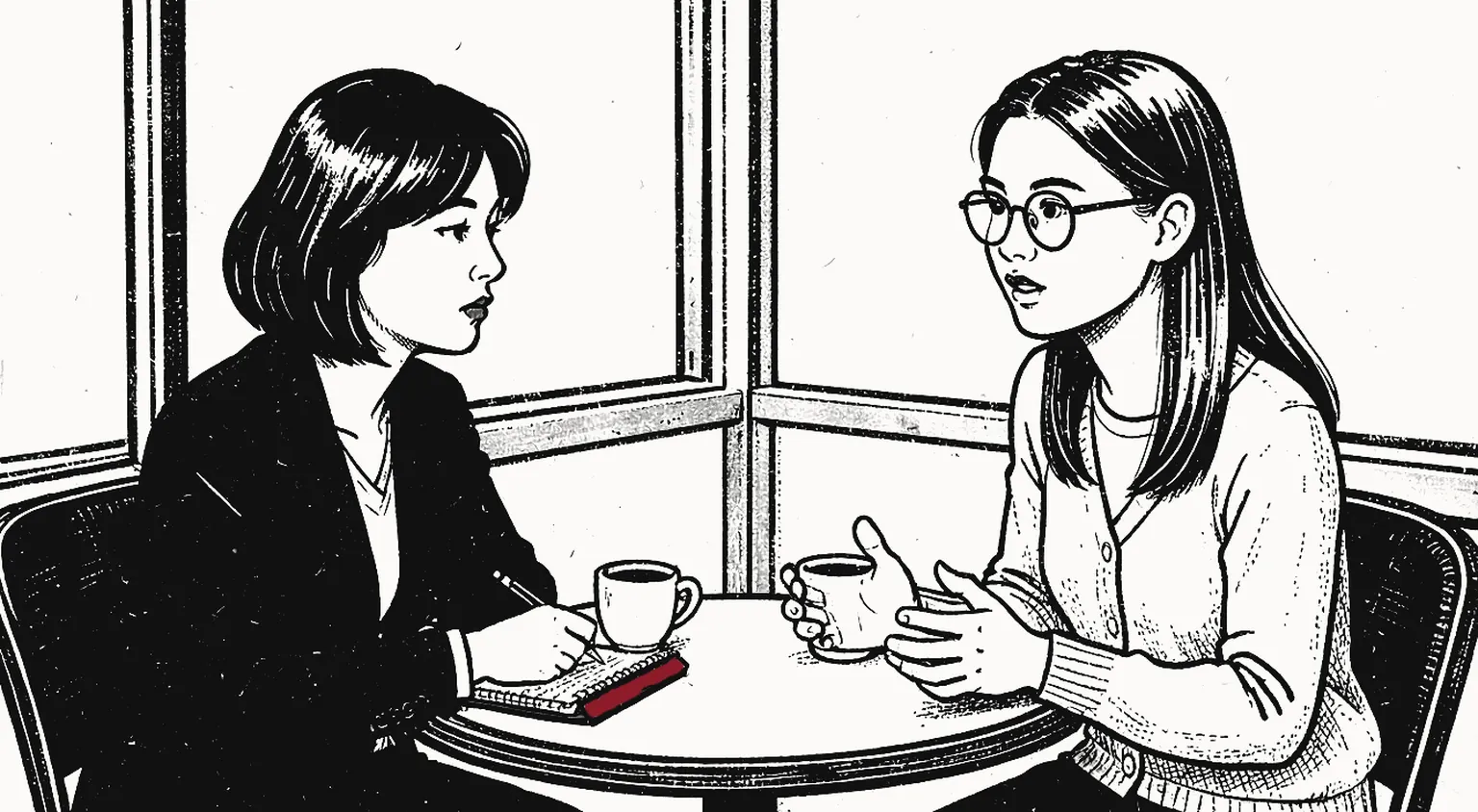
Nat has led her team for three years and has the numbers to prove it. In a review, her boss mentions, almost in passing, that two good analysts have asked to move out of her group. Nat is surprised. She thinks she is direct and fair. She has never once heard the word "harsh."
That is a blind spot. It is a habit that everyone near you can see and you cannot. It gets worse as you rise, because the people who could tell you start to choose their words.
The fix needs no therapy or personality overhaul. Marshall Goldsmith, in What Got You Here Won't Get You There, argues that most of these problems are small habits, and that the first job is simply to see them. My rule: you cannot fix what you cannot see, so get the view from outside, and make it safe for people to give it.
This page is for anyone who feels stuck at work and suspects the cause is not the work. It covers asking, listening, choosing one habit and changing it. It does not teach you to hunt for other people's flaws.
The short answer
- Accept that you have one. Success makes it more likely, not less.
- Ask three people the same question. Pick people who see you work and do not fear you.
- Listen and say "thank you." Nothing else, for now.
- Look for the repeat. One comment is noise. The same comment from two or three people is the signal.
- Change one thing and tell people. Then check back.
DiagramFrom blind to fixed
The first three steps are the work of getting the truth. The last two turn it into a changed reputation. Steps two to five follow Goldsmith's feedback-and-follow-up method in plain form.
Step 1: Accept that you have one
Goldsmith calls it the success delusion. People who win tend to believe their habits caused the win. They see no reason to change a formula that has paid off. He adds that success often came in spite of the habit, not because of it.
His evidence is from his own training programs, so it is not a controlled study. He says that most people in his groups rated themselves in the top fifth of their peers. That is statistically impossible, and it is a useful joke to keep in mind when you think you are above average at listening.
Master Your Emotions by Thibaut Meurisse adds the reason it hurts. He describes an author with fifty 5-star reviews who is crushed by one 1-star review. The brain reads criticism as a threat to the self-image and guards it. So the problem is two layers deep: you cannot see the habit, and you flinch when someone points at it. That is why Step 3 matters so much.
This is Perception Rules: other people act on what they see of you, whatever you intended.
Step 2: Ask three people the same question
Do not ask "what do you think of me?" It invites kindness. Ask a question that has a specific answer:
Pick people who see you work and are not afraid of you. Goldsmith suggests choosing a "best friend at work" with no agenda for the first round. If you ask only people who like you, you learn nothing. If you ask someone who fears you, you learn what is safe to say.
Goldsmith's own method is a wider 360-degree interview with colleagues and family. You do not need a coach for the small version. Three conversations are enough.
Step 3: Listen and say "thank you"
This is the step people fail. Goldsmith's rule is to answer feedback with thank you and nothing else: no excuse, no "but," no story about why you did it. He tells of a COO who started every reply with "But, Marshall, I don't do that." Goldsmith said the first "but" was free and the next one would cost him twenty dollars. The point is that arguing teaches people to stop telling you.
The other person is taking a risk. If they see you flinch, they will not do it again, and you will have trained your team to hide the truth. Calm here is Calm Is Power: you are steady when someone says something unwelcome, so they will say it again.
Write the answers down within the hour. Do not rate them yet. Memory edits the painful ones.
Your callWhat would you do?
You are Ploy, a department head. A peer says in private: "In meetings you cut people off when you already know the answer. They stop offering ideas." You think she is being unfair.
Weaker move. Lever 1 is lost. You defended before you listened, and she will not offer a second note.
Strongest move. Lever 6 and Lever 1. You received it calmly and you are checking whether it repeats before you judge.
Weaker move. Lever 9 is broken. You punished the messenger, which is one of the habits Goldsmith warns about.
Step 4: Look for the repeat
One comment is an opinion. The same point from three different people is a pattern, and patterns are what to fix.
Goldsmith describes the habits as small and common: not listening, not saying thanks, winning too much, adding your own opinion to every idea, punishing the person who brings bad news. Put your answers next to that list and see which one fits. Do not fix more than one.
Beware of two false readings. The first is treating every opinion as true. If one person calls you cold and two call you clear, you may just be clear. The second is trying to read hidden feelings from faces and tone. Body language is weak evidence. A spoken answer from a trusted person is better than a guess about a frown.
Daniel's story shows what this looks like.
Step 5: Change one thing and tell people
Choose the habit that is smallest to stop and biggest in effect. Goldsmith says stopping is easier than starting: leave the box empty of the bad act rather than filling it with a new virtue.
Then tell people. Goldsmith calls this "advertising." If you change without saying so, people still judge you by the old picture. If you say, "I am working on interrupting less, and I would like you to tell me if I slip," they start to watch for the new you. A short apology helps too, and he calls "I'm sorry, I'll try to do better" a magic move.
After a month, ask the same three people again. Goldsmith's method is built on this follow-up; without it, most of the change fades. Use his own "feedforward" version if the past feels sore: ask for one idea for the future instead of a verdict on the past.
Your callWhat would you do?
You are Arun, a senior engineer. Three juniors, asked one by one, say you give code reviews that are correct but sharp, and they stop asking you questions. You believe the reviews are simply honest.
Weaker move. Lever 6 is missed. The result you want is better code, and the habit is cutting off the questions that produce it.
Strongest move. Lever 6 and Lever 9. You keep the standard, change the delivery and say so out loud.
Weaker move. Lever 1 is lost. Over-correcting makes you needy, and a weekly score turns a habit into a performance.
The dark version
This is the line between self-improvement and surveillance. Use what you learn to change yourself. Do not use it to rank other people.
A cleaner way to carry this
Next, read How to Get Promoted, then Power at Work.
Questions people ask
What is a blind spot at work?
It is a habit that everyone around you can see and you cannot. Marshall Goldsmith calls the gap between how you see yourself and how others see you the blindside. Interrupting, never saying thanks and winning every argument are common examples.
Why do successful people have more blind spots?
In What Got You Here Won't Get You There, Goldsmith says wins make people credit their habits, even when they succeeded in spite of them. Few people want to risk a working formula. He also says his own training groups mostly ranked themselves in the top fifth of their peers, which cannot be true for everyone. His data comes from his own programs, so treat it as a strong hint.
Who should I ask for honest feedback?
Ask people who see you work and are not afraid of you: a peer, a trusted junior, a former boss. If people fear you, you will hear only polite answers. Ask each one the same simple question and compare.
What if the feedback is unfair?
Say thank you anyway and wait a few days. One opinion may be wrong. The same point from two or three people is almost never wrong. Fix the pattern, ignore the one-off.
Sources: What Got You Here Won't Get You There; Master Your Emotions. Ideas summarised in our own words.
This page trains Lever 6: Perception Rules. People react to how strong you look, not how strong you are.
Also: Calm Is Power, Integrity Compounds.
Next lever: Go Around, Not Through
Find your weakest lever
12 questions, 2 minutes. You get your type and the one lever to train first.
Take the Influence Score