Attraction & Relationships / Book review
No More Mr. Nice Guy Review: Good Advice, Thin Proof
No More Mr. Nice Guy! by Robert A. Glover
TrainsWarm + Strong · Keep Your Options
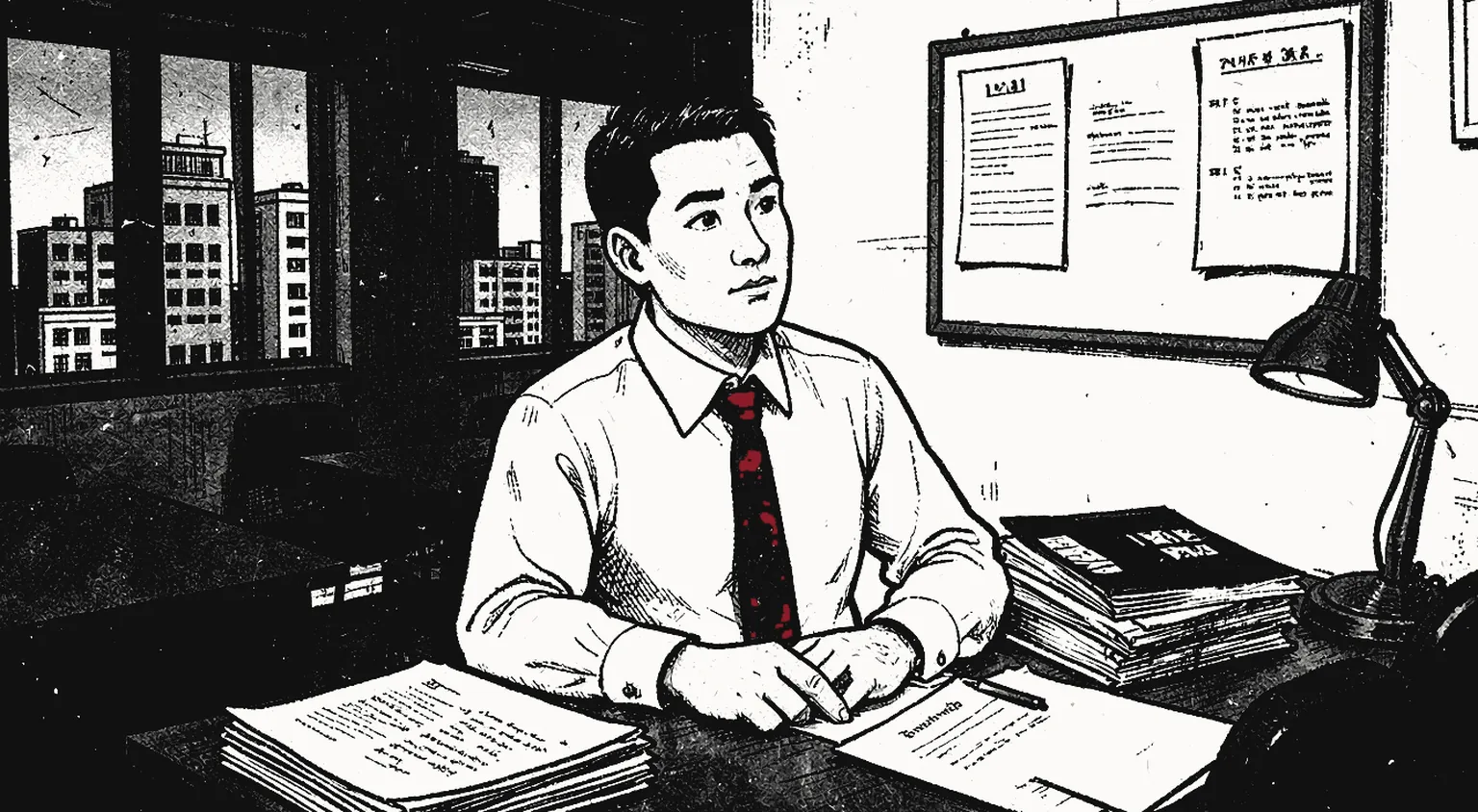
No More Mr. Nice Guy! by Dr. Robert Glover is about the man who does everything right and still feels invisible. He is helpful, agreeable and generous. Others take him for granted, and he does not understand why. Here is the thing: being nice is not the problem. Being nice as a trade is. This review covers what holds up, where the book is weak, and how to use the tools without swinging into the opposite fault.
DiagramThe Nice Guy loop
- Hide. He hides flaws and needs to be liked.
- Give with strings. He gives, hoping for thanks, love or peace.
- Silent deal. The other person never agreed to the terms.
- Resentment. The payback does not come, so he grows bitter or controlling.
- Break the loop. Ask out loud, give freely, hold a boundary.
The loop runs on a deal nobody signed. The way out is to say the deal out loud, or drop it.
The book in 5 points
- A hidden belief runs the show. Glover says many men live by one rule: "If I am good, I will be loved, my needs will be met, and I will have no problems." He treats it as a belief system, not good manners.
- It begins as a child's survival plan. A boy who feels that being himself is unsafe decides he is flawed. Glover calls that deep conviction toxic shame. The boy then hides the "bad" parts and learns to please.
- Giving becomes a hidden demand. The man gives to earn something back, hides his needs, makes secret deals he never states and avoids conflict. Glover calls this caretaking, and says it breeds resentment.
- The cure is personal power. He defines it as confidence that you can handle whatever comes. It is not freedom from fear. His six tools: accept what is, face reality, express feelings, face fears, act with integrity and set boundaries.
- Do it with other people. Close male friends, a body you look after, and safe people who back you up when guilt arrives. Glover warns that recovery can end a marriage.
What it gets right
1. Giving with strings is a hidden demand. The book's best idea is the covert contract: "I do this, so you will do that," and the other person never agreed. Anyone who has done favours to be liked will recognise it. Glover's contrast between real caring and caretaking is a clean test: does the giver need to give? This is the core of Lever 5, Warm and Strong. Warmth with no strength attached becomes a bill someone eventually has to pay.
2. Boundaries are tested in small steps. Glover's cases are small on purpose. Lars, an anxious executive, tells his wife he will work out every day for one week. She objects. He repeats her concern back and goes anyway. By day three she asks how it went. Shane stops showering his girlfriend with gifts and does things for himself instead, and she feels less smothered. These are stories picked by the author, but the move is sound: pick one thing, tell people in advance, ask a friend to back you up, and watch what really happens. The fear is usually bigger than the result.
3. You need somewhere else to stand. The book keeps coming back to the man who has no male friends and no life outside his partner. He cannot afford a boundary because he cannot afford to lose her. That is a bargaining problem, not a psychological one. A person with no alternatives accepts any terms. It points straight to Lever 8, Keep Your Options: friends, work and interests are your walk-away point. Without them, "no" is only a bluff.
Where it breaks
1. The proof is the author's own clients. - Claim: these steps heal the pattern and improve relationships. - Test: Glover cites his own practice (about three men's groups a week) and no study, survey or follow-up. Every case ends well, and the author picked them. Where a marriage ends, the book counts it as a win. No man is shown for whom the steps failed. - Better rule: treat the exercises as experiments, not a cure. Run one, write down what you feared and what happened, and trust that more than the theory.
2. A theory that no answer can contradict. - Claim: the Nice Guy pattern comes from childhood shame and a mother-centred, absent-father culture. - Test: a rough childhood counts as proof. So does a "perfect" family, because such families hide problems. Denial counts as proof too. The social-history claims (the post-war family, an "anti-male climate") are his reading of the period. The census figures show that families changed, not that the change produced Nice Guys. - Better rule: keep the tools and drop the origin story if it does not help you. You do not need a view of your childhood to state a need plainly.
3. Some rules are too strict, and the partner's side is missing. - Claim: "anything less than the truth" is lying, and putting yourself first helps everyone. - Test: by that rule a private afternoon off equals hiding an affair. Offers such as giving no gifts for six months or a six-month sexual pause are stated flatly. Most stories about a wife or girlfriend are told by the man, and the question is nearly always "why did he need her?", not "is she right?". The book gives little guidance if a partner is cruel or unsafe, or if you have no group behind you. - Better rule: tell the truth about what matters, and keep ordinary privacy. If a boundary makes you feel unsafe, stop and get outside help first. Check that the other person is not simply right before you decide they are the problem.
A real-world check
Our take
Your callWhat would you do?
You have said yes to your partner's plans for three weekends in a row, and you wanted one free afternoon for the gym. This weekend again, plans are made for you without a question.
Weaker move. Lever 5 is missing the strength half. This is a covert contract, and a silent bill nobody agreed to.
Weaker move. Lever 5 is missing the warm half. You are right about the need, but a sudden ultimatum swaps one problem for another.
Strongest move. Lever 5 and Lever 8. You state a plain need, offer something real in return, and keep a life of your own.
How to use it without becoming a jerk
The book also asks you to do the work next to safe people. Take that part seriously. Pick one friend who will back you up when the guilt arrives, and pick one thing to change for a set time.
Lever map
| Book idea | Lever | Verdict |
|---|---|---|
| Covert contracts and caretaking | 5 Warm and Strong | Strong. The most useful idea in the book. |
| Boundaries tested in small steps | 5 Warm and Strong | Strong. Cheap to try, easy to check. |
| Male friends, a life outside the relationship | 8 Keep Your Options | Strong. It is real leverage, not self-help talk. |
| Facing fears in a small, planned way | 1 Calm Is Power | Good. Fear shrinks when tested. |
| Honesty as "any shading of the facts is lying" | 9 Integrity Compounds | Too strict. Separate privacy from deceit. |
| Every case ends well, partner is the problem | 3 See the Dark Move | Weak. Ask first whether the other person is right. |
Who should read it
| Reader | Verdict |
|---|---|
| Beginner | Yes, if you recognise yourself. Read the chapters on needs and personal power, and do one exercise. |
| Experienced | Useful for naming your own hidden deals. Skim the childhood and masculinity chapters. |
| Skeptic | Read it as a set of experiments, not a study. The tools are testable, the theory is not. |
Read next
- Dating power dynamics: who needs whom more, and why it matters.
- How to be respected and liked: the warm-and-strong balance in daily life.
- The Art of Seduction review: the opposite error, charm as a tool.
Questions people ask
What is the Nice Guy Syndrome?
Glover's name for a hidden belief: if I hide my flaws and become what others want, I will be loved and my life will be easy. He says the belief fails because the man gives with strings, avoids conflict and never asks plainly for what he wants.
Is No More Mr. Nice Guy backed by research?
No. The book rests on the author's own clients and theory, with no study and no comparison group. The exercises are cheap to test in your own life. The explanations of why they work are asserted.
Is the book only for men?
It is written to men, and some of its history and gender claims are one-sided. The core pattern, giving to be liked and hiding your needs, shows up in women too, and the tools work for both.
Sources: No More Mr. Nice Guy!. Ideas summarised in our own words.
This page trains Lever 5: Warm + Strong. Warmth AND strength. Only one makes you a pushover or a bully.
Also: Keep Your Options.
Next lever: Perception Rules
Find your weakest lever
12 questions, 2 minutes. You get your type and the one lever to train first.
Take the Influence Score