Attraction & Relationships / Book review
King, Warrior, Magician, Lover Review: Useful Mirror, Weak Proof
King, Warrior, Magician, Lover by Robert Moore, Douglas Gillette
TrainsWarm + Strong · Calm Is Power · Perception Rules
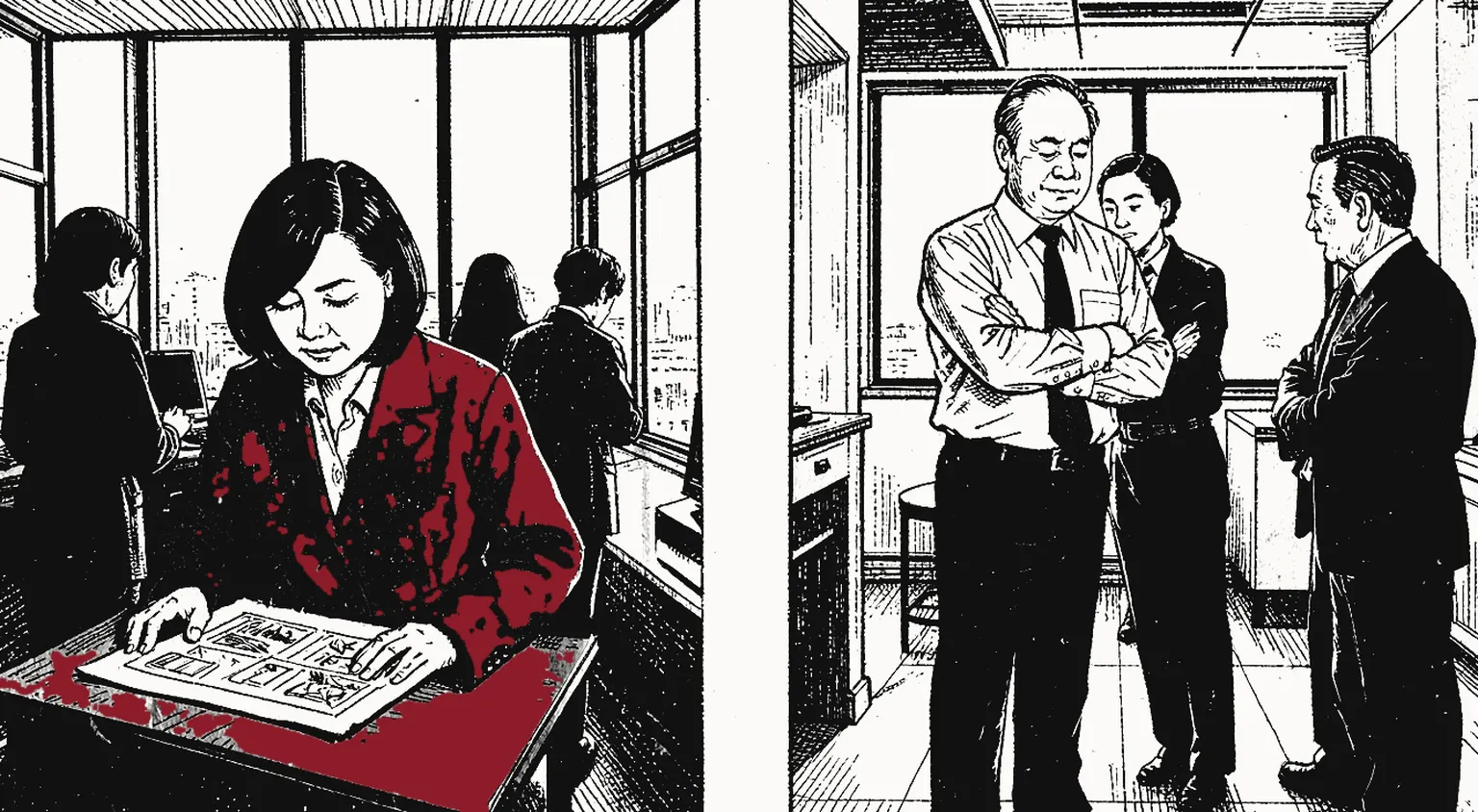
King, Warrior, Magician, Lover (1990) by Robert Moore and Douglas Gillette asks a plain question: why do some capable adults act like boys? Their answer is that a grown person needs four inner energies, and most of us run on one or two. The Author's view: the book is a better mirror than a map. It shows you where you grab and where you hide. It does not prove how minds are built.
DiagramThe four energies and their broken forms
The book in 5 points
- Four energies make a mature person. The authors call them archetypes, meaning deep shared patterns in the mind, an idea borrowed from Carl Jung. The King orders and blesses, the Warrior acts, the Magician sees, the Lover connects.
- Many adults never grew up. They stay in what the book calls boy psychology, with childish patterns in an adult body. Each boy pattern matures into one of the four.
- Each energy has two shadows. One shadow grabs too much and one gives up. The King's are the Tyrant and the Weakling. The Warrior's are the Sadist and the Masochist, who takes abuse far too long and then explodes.
- The cause is lost initiation. Tribal cultures had rites and elders that moved a boy into adulthood. Modern life kept only fake versions, such as boot camp and street gangs.
- The cure is inner work. Write to the inner voices, picture an archetype on purpose, admire people who have the energy, and act "as if" you already do. The everyday self chairs the board and silences no one.
What it gets right
-
The pushy and limp shadows are a sharp test. Most self-help warns you about one fault. Moore and Gillette say every strength fails in two directions. The boss who takes the credit and the boss who never decides are both failing the same job. This is the clearest link to Lever 5, Warm and Strong: strength without warmth turns into Tyrant, warmth without strength turns into Weakling. Both lose the room within a year.
-
Blessing is real power. The King's second job is to see people and say what they are worth. The authors say young people are "starving for blessing" (Ch 5) from older ones. You will see this in almost every workplace. A manager who names what you did well, specifically, gets loyalty that a pay rise does not buy. The test is cheap: whom did you truly notice this week? This is Lever 6, Perception Rules used on purpose.
-
The Magician's calm and the Warrior's limits. Two practical ideas stand out. The Magician is the watching mind: when fear or anger rises, you sit back and observe it without pushing it down. The Warrior knows his limits, spends no more energy than needed, and does not confuse anger with duty. In the book's samurai story, the man who swore revenge sheathes his sword because he would now kill for his own anger. This is Lever 1, Calm Is Power. Without it, every other move is driven by whatever you feel that hour.
Where it breaks
-
The proof is old stories read through the authors' frame. - Claim: these four archetypes exist in every man and explain his behaviour. - Test: the book rests on myth, ancient kings, film scenes and the authors' own cases. It names no controlled study. Kings in Egypt and dreams in therapy show that people tell similar stories. They do not show a King inside every head. - Better rule: use the four as questions, not as facts. "Where do I take credit?" is checkable. "My King energy is weak" is not.
-
A theory that explains every outcome. - Claim: too much of an energy is one shadow, too little is the other. - Test: a man who is too passionate is an Addict and one who is too flat is an Impotent Lover. Nothing could count as evidence against it. Other views of addiction and depression (habit, sleep, body chemistry, loss) are not weighed. - Better rule: when a label explains everything, it explains nothing. Describe the behaviour, then ask what changed it.
-
It is built around men, and the labels are easy to misuse. - Claim: these energies are mainly male, and women appear mostly as objects of desire. - Test: calm, courage, insight and warmth are not male. Leaders such as a hospital director or a start-up founder like Mei use all four. The shadows also make a handy insult, and a team that calls its boss "a Tyrant" has stopped looking at what he did. - Better rule: keep the energies, drop the gender frame, and apply the shadows to yourself first. If someone near you is cruel or unsafe, that is a matter for outside help, not archetypes.
A real-world check
Your callWhat would you do?
You lead a small team. Last week a colleague criticised your plan in front of everyone, and half of what she said was right. Today you must reply in the group chat.
Weaker move. Lever 1 is missing. This is the pushy shadow, a defence driven by feeling before you have read what is true in her point.
Weaker move. Lever 5 is missing the strength half. This is the limp shadow, and handing your decision to someone else.
Strongest move. Lever 1 and Lever 5. You let the first feeling pass, give credit where it is due, and keep your decision.
How to use it without becoming a jerk
The book's own practice pages are good. Give one ordinary thing five minutes of full attention each day. Pick one task you have avoided and take the first small action within ten minutes. Pick one place where you take too much and set a limit.
Lever map
| Book idea | Lever | Verdict |
|---|---|---|
| Pushy and limp shadows of every strength | 5 Warm and Strong | Strong. The best idea in the book. |
| Blessing: see people and say their worth | 6 Perception Rules | Strong. Cheap, specific, and it works on anyone. |
| The watching mind, observe feeling before you act | 1 Calm Is Power | Good. Practical and easy to try. |
| The Warrior who knows his limits | 1 Calm Is Power | Good. Matches ordinary burnout advice. |
| Archetypes as inner facts, rites of passage | 3 See the Dark Move | Weak. Told as stories, never tested. |
| Four energies as male only | 9 Integrity Compounds | Skip the frame. The skills belong to everyone. |
Who should read it
| Reader | Verdict |
|---|---|
| Beginner | Read the chapters on the King and the Warrior, then do the shadow check. Skip the rites of passage chapter. |
| Experienced | Good for naming your own pattern when under pressure. Read it slowly and argue with it. |
| Skeptic | Treat it as a prompt for self-reflection. The ideas are testable in your own week, the theory is not. |
Read next
- No More Mr. Nice Guy review: the limp shadow in a dating and family setting.
- Dating power dynamics: who needs whom more, and why it matters.
- How to be respected and liked: the warm-and-strong balance in daily life.
Questions people ask
What are the four archetypes in King, Warrior, Magician, Lover?
Moore and Gillette say a mature inner life rests on four patterns. The King brings order and blessing, the Warrior acts and serves a cause, the Magician sees clearly and knows hidden things, and the Lover feels and connects. Each has two broken forms, one that grabs too much and one that gives up.
Is King, Warrior, Magician, Lover backed by research?
No. The book rests on myth, film, dreams and the authors' therapy cases. It names almost no studies and no numbers. Read it as a mirror for self-reflection, not as a finding about how minds work.
Is the book only for men?
It is written about men, and its examples lean male. The skills it describes, such as calm, courage, clear sight and warmth, belong to anyone. Women can use the same four questions on their own lives.
Sources: King, Warrior, Magician, Lover. Ideas summarised in our own words.
This page trains Lever 5: Warm + Strong. Warmth AND strength. Only one makes you a pushover or a bully.
Also: Calm Is Power, Perception Rules.
Next lever: Perception Rules
Find your weakest lever
12 questions, 2 minutes. You get your type and the one lever to train first.
Take the Influence Score